Do I need a Forward-Facing Baby Carrier?

By |2022-02-06T16:41:24+01:00April 30th, 2019|Choosing a Carrier, How to carry|

Your baby loves to be carried, but he doesn’t like facing you. Put him down and he wants to be held, pick him up and he wants to be put back down.  Sound familiar?  There can be so many reasons why your baby doesn’t want to be held or carried in a sling, but maybe your child just wants to see what’s going on.

In a baby carrier where your baby is facing in towards your chest, he may start pushing away, or trying to turn himself around to look out. When you’re trying to feed him – whether breast or bottle – he might just want to look around and not miss a minute of what’s going on.

This is a tricky time for parents. Your baby is growing, their brain is more and more capable of taking in information, processing and understanding it, and they want to learn. They still want the closeness and comfort of being carried, yet the tummy to tummy cuddles are feeling restrictive.

Should I carry my baby facing outwards in a baby carrier?

When carrying your baby in a carrier, you really want to just replicate how you hold them in arms, and keep that carry as natural as possible.  Support their bottom and thighs, support the natural curve of their spine, and be responsive to their needs.

This can be difficult in a forward-facing carrier, firstly because of gravity pulling your baby’s legs and body down and away from you rather than into a hug like when they face into you.  Their backs may start to arch backwards – ok in the short term, vertebrae are flexible after all, but not something you want day in and day out at a crucial time for bone and joint development.  And when facing away from you, you can miss your baby’s cues for hunger, or the very first signs of distress.

Are there any special rules for facing forwards in a baby carrier?

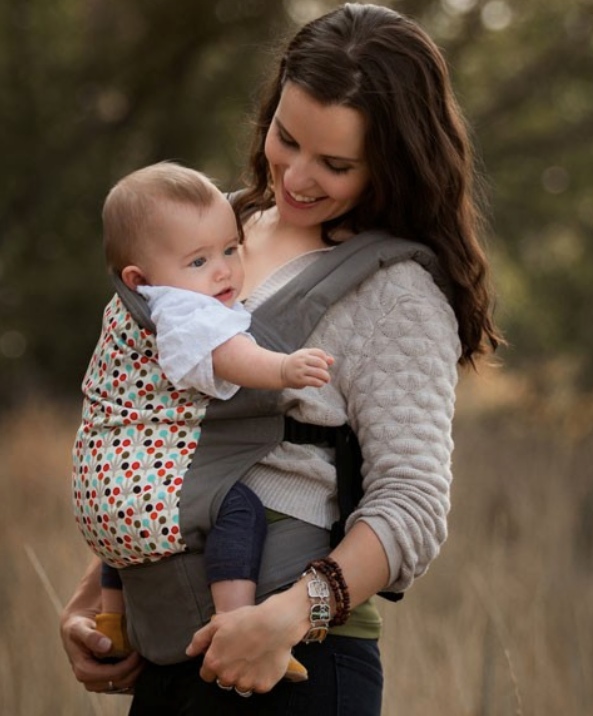
If you want to carry your baby facing away from you, use only carriers that have been designed to have your baby facing-forward in them. Other options might be to try a ‘hip carry’ (many clip-on carriers do this, plus ring slings or woven wraps), or to carry your baby on your back.

Continue to be aware of and responsive to your baby’s cues for feeds and attention.

And ensure your baby’s face and neck are not obstructed by the carrier body, hood or clothing and airways are clear.

So what else….

How long can I carry my baby in a carrier for?

Keep forward-facing to under 30 minutes. Babies can get over stimulated in the big wide world with so much going on, or they may just get tired and start to be lulled to sleep with the motion of walking and moving for a longer time. It’s best to turn them around to re-connect with you and give them the chance to lay a head on your chest, before you’re stuck with a sleeping child with no head support, or an unhappy child that’s just had enough of everything, and can’t be settled.

If your baby gets over-stimulated or seems unhappy, turn them around or take them out of the carrier.

If your carrier is in a narrow-based carrier, then even in a facing-in position I would recommend limiting the time to around 30 minuntes.

Facing inwards towards you, in a well-fitting wide based carrier where your child’s hips are held in a neutral hip-healthy position, spine is well supported in a gentle curve, legs are not overstretched, and everyone is comfortable and happy, there is no time limit.

What age can my baby start facing outwards in a baby carrier?

Babies who have full head control and are tall enough can face forwards in a carrier. Just because your baby has head control won’t mean they can forward-face yet – you will also need to ensure the carrier fits them well in this position. Their head should be clear of the panel, and the panel edge away from their neck.

At 12 months my baby feels heavy – is my baby too old to face outwards?

After about 12 months, it becomes quite uncomfortable for the wearer in a facing outwards position. By this age, your baby/toddler’s legs are longer, stronger and heavier, and you will find the weight distribution is better if you can carry them in a way where their legs wrap around you rather than pull away from you. Most baby carrier manufacturers will only recommend forward facing up to around 12 months. After that age you would be much better, in terms of comfort and keeping your carrier stitching in-tact, to carry your growing nosey toddler on your back.  Buckle style baby carriers tend to last you up to the age of 2, 3 or even 4, for back-carries.

Can I let my baby fall asleep in the baby carrier?

If your baby falls asleep, or looks or sounds sleepy, turn them around to face you, or take them out of the carrier.  Remember as well that your carrier may need adjusting back to a wide seat position for facing inwards, so don’t leave it until that last minute!

Facing towards you, your baby can sleep with their head resting against you, or if needed with support from a sleep hood.

How do I ensure a ‘good position’ in a forward-facing baby carrier?

If your carrier allows, do a ‘pelvic tuck‘ once the carrier is secure, to get a good position for the hips.  It is possible, and far more comfortable (and healthier), for your baby to have their upper thighs lifted upwards, so their weight is on their bottom and thighs, and not just through their nappy area with their legs dangling.  Some carriers do this better than others; the best one I have come across is the Tula Explore.

Your own physiology may determine how your baby is able to sit in a carrier – think of boobs and tums in terms of a back-rest for your child, and the angle your child needs to sit at to be comfortable.  If you’re not sure, pop down to your local sling library for some advice.

Anything else?

Follow the TICKS guidelines for safe babywearing while forward-facing.

What’s a Sling Library? Your questions answered

By |2022-02-06T15:42:38+01:00February 5th, 2019|Choosing a Carrier|

Are you wondering about getting a sling for your new baby? Maybe you already have a carrier, but you feel it’s not right for the age of your child and you’d like to try another. Maybe you’ve had one recommended by a friend, but it’s more than you wanted to spend and you’re reluctant to pay out.

The thing about slings and baby carriers is they’re a bit like jeans. There are lots of brands and styles out there, some cheaper than others, some worth the investment – but also some, where you’re paying for a label but actually they’re pretty uncomfortable. When you buy a pair of jeans, you need to try them on, regardless of what size it says it is – you know they’re all different, and will probably end up not buying the ones you picked up first.

But where and how can you try on a sling before buying it? One answer, and still one of the best kept secrets in many areas, is a sling library.

I’ve heard of a Sling Library, what is one?

The word ‘library’ conjures up an image of a silent, formal space. Believe me, a sling library is neither formal nor silent!

You may find a sling library attends one of your local baby/toddler groups, or it may be at a local café or soft play area. You will find a collection of different types and styles of baby slings and baby carriers, available to hire. You may be able to browse the carriers by yourself, and/or you can ask a babywearing consultant or babywearing peer supporter for some guidance.

The idea is that you get to see a whole range of baby carriers, not usually available in the shops. Even if you’re intending to buy online, visiting a sling library can save you time and money, as you can try on carriers, before committing to buy. Even if you’re lucky enough to have shops like John Lewis, Mothercare, JoJo Maman Bebe close to you, they’re not going to be very pleased if you take all the carriers out their boxes and insist on trying them all on. They’re also not going to let you return the carrier once you’ve used it.

You can hire the carriers from a sling library for a small fee and most libraries will either ask for a deposit or a membership fee, just to cover the risk of damage or the sling going missing. Hiring a sling will help you to find out how easy a carrier is to use, and how comfortable it is – a trial period before you decide if that’s the sling you want.

Is a sling library run by the council? Do they make a profit?

These are privately run, and nothing to do with the council. Some are run as not-for-profit organisations, and any money raised from the hires will go back in to buying more carriers, and paying for the venues. Sometimes the babywearing consultants will be paid a small amount, but mostly they work on a voluntary basis for the reward of helping people and sharing the love!

Some sling libraries are run alongside babywearing consultancy business and baby carrier retail businesses. Whatever type of organization, hire fees are small and the nominal amount of money raised through fees and membership will just help to keep the library running, and keep the slings clean and safe. Where a sling library is linked to a profit-making business it is likely that the sling library benefits from a small investment from the commercial side of the business, and may be able to have more newer carriers within the hire stock.

So who runs a sling library?

Sling libraries will normally be run by parents who have used slings with their own children. A sling library can be run by babywearing peer supporters who have taken a basic training course, or babywearing consultants who have undertaken more training and are experts in the field. Larger sling libraries will have a few consultants and a few peer supporters.

What can I expect at a sling library?

A sling library is normally a drop-in session. However for busier larger libraries, you may need to book a time-slot in advance, so do contact your library before turning up to ensure you don’t have a wasted trip. It’s a good idea to get there well in advance of the end of the session, so you have enough time before they need to pack up. Allow at least 20-30 minutes to find a sling and arrange a hire.

You may be able to browse the slings yourself, or you can ask one of the peer supporters or consultants for some help. They will guide you towards suitable slings, give you pro’s and con’s for the carriers, and can demo them for you. Depending on the library and how busy it is, you may need to put your name on a list and wait your turn, so take some cash for a coffee, relax, feed your baby and chat to the other mums and dads waiting with you.

Do I have to pay?

There may be an entry/advice fee:

  • Some sling libraries will ask for a small entry fee, which covers the sling consultant’s time, and may go towards the cost of hiring the venue and may also pay for a hot drink. If the sling library is attending a baby group that has an entry fee then you will be expected to pay for entry to the group.
  • Some sling libraries offer a membership scheme, where you can pay a one-off or regular fee, and benefit from lower hire fees, and lower or no deposit.
  • Some sling libraries may ask for a small fee if you are taking your own carrier along and not intending to hire from them. This is just to cover the cost of the time spent with you.

You will also need to pay a fee for sling hire. This can be around £5-£15 for 1 or 2 weeks, or more for longer hires.

There is usually also a deposit to pay. This covers the cost of damage or a sling getting lost. The cost varies between libraries and can be different for different slings. Bear in mind though that if you have paid no deposit or just a small one, if a repair or a replacement carrier is needed following some mishap while in your care and the deposit you’ve paid is not enough to cover expenses, you may be invoiced once the carrier is returned. Sometimes the deposit is waived if you are able to pay with a card – and again be aware the cost of any damage/loss to a hired sling can be charged to your card.

Free stretchy hire:

  • Some sling libraries will hire stretchy and newborn slings for free for low income families. Do check in advance if such a scheme exists in your area, and whether you would qualify.

Should I stay for the whole library session?

There’s no need to stay longer than you want to. You will usually be able to get a coffee and your baby/toddler can play while you chat to other mums and dads. It can be nice to go with a friend so you have someone to wait with; it can be nice to make new like-minded friends and maybe arrange to meet there regularly; or it can be equally as nice to take a book and relax by yourself while your baby sleeps. But if you’re in a rush, you need to leave because your baby needs to nap or feed, or the social side of these events is not for you then do not worry. No-one is going to mind what you do or how long you stay for!

My baby is due be taking a nap at the time of the sling library, do I need to wake him?

Sling libraries will have weighted dolls you can use to mimic the size and feel of a real baby in a baby carrier. These are a great way to practice with a new carrier, and it saves putting your own baby in and out of multiple carriers while you find one you like. So no, you don’t have to wake or upset a sleeping baby. Your baby can rest on a blanket or in the play area, in your buggy, or it can be helpful to bring someone with you to hold the baby when needed. Peer supporters and consultants are also pretty willing volunteers for holding babies!

Where do I find my local sling library?

The place to look first is The Sling Pages map. Google is your friend too! Or ask in your local parenting group on Facebook. Another good place is NetMums, where you can search in your local area for ‘Sling Libraries & Support’. You could also ask any sling library you find if they know of any more closer to you, and they should be able to find out for you.

I can’t get to the sling library – what can I do?

It’s still worth getting in touch with your local sling library. You may find they can offer appointments outside of the published library times, or you may be able to arrange a hire and pick it up or have it dropped off to you. You may be able to book a virtual session via video call.

There is no sling library near me – what can I do?

Some sling libraries offer postal hires. Some retailers offer ‘try before you buy’ incentives. You may be able to book a virtual session via video call.

Here is our own sling library, bookable online and slings are available to pick up from BN27 or can be posted.

I didn’t get long enough at the sling library to try everything – can I come again?

Sure, there’s no reason why you can’t go to every sling library session until you have literally tried on and hired everything. Your babywearing peer supporters and consultants can help you with which carriers might be more suitable than others. It is a very personal thing and it can take some time to find out what you like about a carrier and what you don’t like, and you may want to do a few hires before you find a carrier you love. You may also want to come back when your baby is a bit older as your needs will change as your baby grows.

I didn’t get long enough at the sling library to try everything – it was really frustrating

If you would rather, you can book a private consultation with a babywearing consultant. This would give you a longer session, dedicated to you and your family’s needs, to explore many more options. These are invaluable if there are additional health or developmental needs, but anyone can book a private session and benefit from the expertise of a babywearing professional. Your consultant may also offer workshops or masterclasses, if there is something in particular you want to learn and practice in a dedicated space with others. Or they may be willing to set up a workshop for you and some friends with similar age babies to spread the cost of a consultation between several couples. Follow up with your sling library to see what other options they can offer you.


What’s in the Terms and Conditions of Hire?

All sling libraries should have terms and conditions of hire, but are you going to have time to read this when you’re in the middle of a busy library session? – probably not. Standard clauses include:

  • Don’t smoke while wearing the carrier
  • Keep the carrier away from pets
  • Don’t wash the carrier – this may come as a surprise as you’ll want to look after it and keep it clean. However if the carrier is damaged in the washing machine you will probably end up having to pay extra. Most sling libraries like to know what their carriers are washed with, and use only skin-kind and eco products, and would rather do this themselves. If you have a disaster with poo or sick that does need to be cleaned up sooner rather than later then contact your library to find out how they would like you to wash it. You can spot-clean the carrier; some libraries may also provide drool pads to help protect the carrier from dribbly babies.
  • Your deposit/membership covers damage or the sling going missing, but you may be liable to pay extra if the deposit is not enough to cover costs if the sling needs replacing or repairing – so look after it!
  • Return the sling on time. If you return the sling after the expected return date, you may need to pay ‘late fees’ plus additional hire fees. Keep in touch with your library if you are not going to be able to return the carrier as planned.
  • Read the sling instructions before use, and only use the carrier in a way shown in the instructions or shown to you by a slings professional.
  • Don’t lend the carrier to anyone else while it is on loan to you.


Where can I buy a carrier from?

Your sling library may retail the carrier you have hired – so do ask. They may be able to offer a loyalty discount if you have hired from them, which can save you more money than you can get by shopping around (and it also saves you time and effort too!), and if there are any problems with the carrier then you have a friendly face and a real person to deal with, not a computer.

Even if your sling library doesn’t retail the sling you are after, they should be able to refer you to a trusted retailer, and may be able to pass on a discount to you – again, it’s worth asking!

Amazon and eBay can be tricky places to buy from, here’s a blog I wrote about buying from these sites/apps.

Need to know anything else?

Our sling library sessions are running virtually, slings can be picked up from BN27 or can be delivered.

Baby Slings – A Beginners Guide

By |2022-02-06T15:44:20+01:00April 11th, 2018|Choosing a Carrier|

Baby Slings – A Beginners Guide

What is a sling?

A sling can come in many shapes and sizes. As the owner of The Baby “Sling” Boutique, I use the word ‘sling’ to mean any of the tools for carrying your baby, where you can have both your hands free. For me it covers fabric baby wraps, structured carriers with buckles or ties, and everything in between. Some people use the term to just mean ring slings, pouches or stretchy wraps. Other words you might hear for the same kind of thing are baby carriers, ring slings, backpack carriers, meh dai, mai tai, hybrid carriers, onbu or onbuhimo and papoose to name a few.  There are also hip seat carriers, but as these are a ‘carrying aid’ needing a supportive arm, and don’t support a child’s back, I don’t tend to class them the same as a ‘sling’.

Brand names you might hear are Baby Bjorn, Ergobaby, Close Caboo, Infantino, Moby, Manduca, Baby K’Tan, Lillebaby, Chicco. There is also Beco, Boba, Neobulle, Je Porte Mon Bebe, Scootababy, Connecta, Integra, Hoppediz, Isara, Didymos, Lenny Lamb, Little Frog, and lots lots more.

Sadly a sling is one of those bits of baby equipment that everyone seems to buy but not everyone uses.

Why would you want one?

The first reason is that slings are convenient. No-one really tells you when you’re expecting your first child just how much they want to be held. We talk about there being a 4th trimester, which is the first 3 months after being born. Your baby is adjusting to being outside of the womb, and is still comforted by gentle movement. They find the warmth and touch of a parent or grandparent, and familiar sounds like your heartbeat, voice and breath calming. In the early weeks, a baby will sleep lots, and will probably fall asleep in your arms time and time again. If you can get your baby to nap in a sling during these early weeks it will really help you, even if it’s just a chance to get up from the sofa and make a cup of tea, or get to the loo!

As time goes by, your baby will go through developmental leaps, where their brain changes and their world as they knew it is turned upside down. Everything that was familiar is now bigger and more confusing, and while they figure it out and make sense of it all, the only constant is mum or dad. They will generally want to be close to you more than ever during these times. Then there’s teething. And illness. And immunisations. And being out in new places, or meeting new people. Your baby will want to be held and carried, possibly more than you will realize. And a sling will give you the ability to carry them, while also being able to use your hands for other things and get on with doing stuff. Even on days when you want to use the buggy, tuck a sling in your bag, just in case your baby wants to be held is not happy to be left in the buggy (yes it happens – lots!) More than just for the 4th trimester, I think a sling is just as necessary for ‘the first 1,000 days’, and beyond.

From mum or dad’s point of view, a sling can be useful for walking on the beach, woods, fields and anywhere you would struggle with a buggy. It can be useful when shopping, on holiday, going through airports, going to music festivals, taking an older sibling to the park and the school run, and for hopping on and off public transport.

Being held close to mum or dad (grandparent, childminder, etc etc) also helps develop a string bond between you. It helps with breastfeeding – from a biological point of view, it increases oxytocin and helps milk production and let-down. From a practical point of view you are able to feed on the go, using the sling as additional support. Oxytocin released helps counteract the stress hormone cortisol, and help your baby to relax and sleep better. The upright position your baby is held in can help with reflux and colic. Your baby will also learn about the world, pick up on body language and develop listening and language skills, as well as gaining better balance from adapting to the gentle movements.

Almost surprisingly, carrying your baby in a sling is also good for you. The oxytocin will get to work on you, reducing stress and helping you sleep better. You probably won’t even notice the extra calories you are burning, and the muscle-tone you are building, if you start carrying your baby as a newborn and carry them regularly. There are sling exercise classes now all over the country, but walking every day if you can with the sling will benefit you just as well, and help your cardiovascular system and mental wellbeing. The positive effects of carrying a baby during post-natal depression are also well-documented.

The list goes on and on… I have written a couple of blogs about this which can be found here.

I’m also going to mention the price. Parents-to-be will spend a lot of time and a lot of money picking a travel system – hundreds of pounds – just on a buggy. A quality stretchy wrap can be bought, new, from around £35. A new ring sling can be around £45-£50. You don’t need to spend much at all, and you don’t have to compromise on quality or safety if you only have a small budget. With a sling you love, you may find you don’t even need to use a buggy much, if at all!

Which sling is best?

There is no ‘best’ sling. There, I’ve said it.   Everyone is different, every baby is different.

For a newborn, we generally recommend a stretchy wrap. These are soft, will fit any size adult, and will support your baby’s delicate spine and back gently. They will provide a nice wide seat where your baby’s hips are kept in a healthy position for development. These will last you up to around 8-10 months, although some brands are sturdier and will last for older babies and toddlers.

JPMBB Basic - Crimson Red
JPMBB PhysioCarrier - Elephant/Blue

Other options for a newborn include a soft-structured carrier like an Ergo, where you fasten a waist belt around you, there is panel that supports your baby’s bottom and back, and it clips and tightens using buckles. You gain points here for convenience, but you may also lose a few points in good positioning and support.

Beco Gemini Plus One

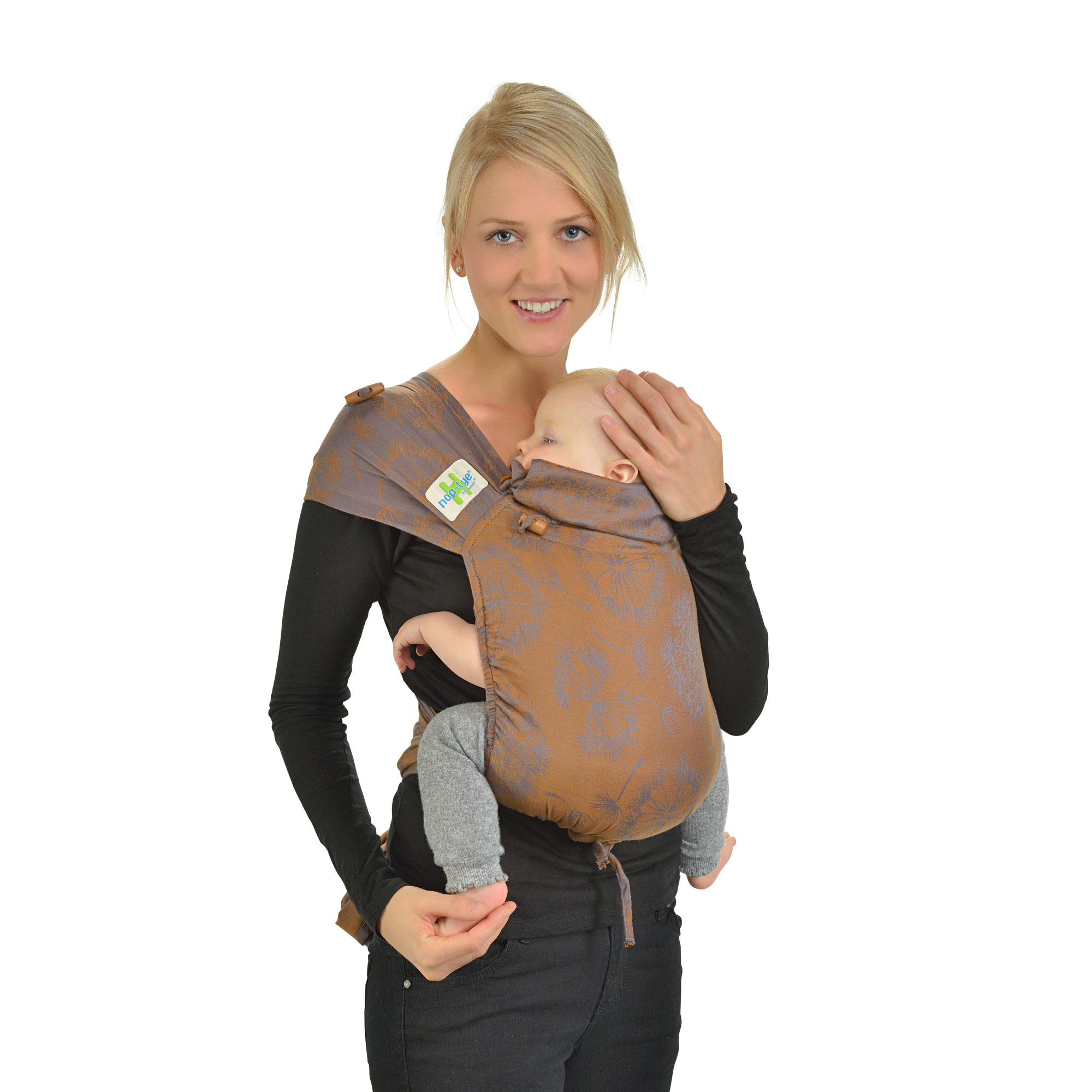
A more versatile version of this is based on an Asian Meh Dai style carrier, where you tie the waistband around you, a similar panel supports your baby’s bottom and back, and the shoulder straps tie with a double-knot. These carriers can adjust easier to a growing baby, some better than others, and can also be transferred easier between mum and dad say, and often provide a better position for your baby. These are a good compromise between convenience, comfort and positioning; a good all-rounder.

hop tye chicago gold limited edition

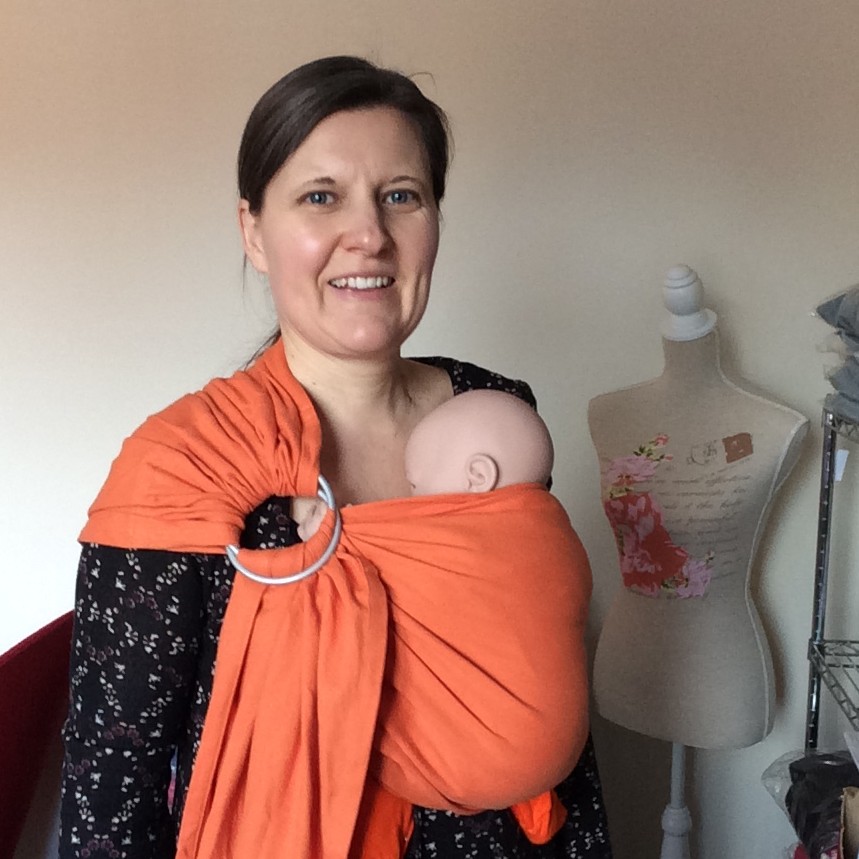
One of my favourites for a newborn is a ring sling. This is a one-shouldered fabric carrier that adjusts using rings. It can create a lovely deep knee-to-knee seat for your baby, and support the curve of their spine. These can be great for breastfeeding on the go, and will last and last right up until toddler-hood and beyond. You win points here for being quick to use and lightweight, but lose some for being one-sided and for having to master a new skill to tighten it well.

Little Frog Ring Sling - Obsidian

There are also wraps made of a long length of woven fabric which although not soft and stretchy, will provide better support than a stretchy wrap, and usually enable you to carry your baby for longer during the day than a soft-structured carrier. The weight of your baby is spread across your back, across your shoulders, and is absorbed by the length of fabric. The weave will have some give, and the carrier is formed as you drape it around you and your baby, sometimes several times round, tightening it strand by strand, and tying. They come in different lengths, blends of fabric, and you can tie them on your front back and hip in an endless number of carries. Points awarded for comfort, versatility and attractiveness, points lost for ease of use.

Colimacon & Cei - Wrap Orange Papaya
Huckepack Tendril-Turquoise-Grey Wrap

Are they safe?

Slings are safe. Always follow the manufacturer’s instructions or those of a babywearing professional, your own feelings and intuition, as well as the safe carrying guidelines that have been produced.

The two very basic themes of safety which these guidelines are based upon are 1) you should always make sure your baby’s airways are unobstructed, and 2) you should make sure that your baby will not fall from the carrier.

In the UK we have TICKS, in the USA they have the ABC’s and in Canada they have the Visible and Kissable campaign. They provide easy to remember checklists, which you should keep in mind when putting your baby in the carrier, and throughout their time in the carrier.

TICKS babywearing safety guidelines
Babywearing International ABCs
Visible and Kissable

How do you use it?

There are baby sling educators like myself, either consultants or peer supporters who can show you how to use the different types of carriers. You can book appointments, workshops, or turn up at a sling library – depending on the type of support you feel you would like.

A consultation appointment with a babywearing consultant can seem like an unnecessary expense and a luxury you can’t afford, but a session like this would give you dedicated time on a one to one basis to learn new skills, focusing on you and your baby, and what you need from a carrier. Think of a personal stylist, who will work with you to figure out your style, colours and what works for your body shape, and come up with suggestions for a new wardrobe! – only for slings. (By the way, these sessions in the fashion industry cost upwards of £85 an hour!)

A workshop is generally less expensive, and will have a certain focus for learning within a group, and will be less tailored to your individual needs. Think of an IT training course at work, where although the group is there to learn the same things, the delegates all come from different job roles, some people will take to it more naturally than others, and some will hide at the back not quite taking it all in, and wary of asking stupid questions!

Sling Appointments

At a sling library you may get to see demos of various slings, and meet like minded people in a social setting, but time to learn new stuff will be limited. In terms of learning potential, think of a market-stall showing the latest JML cleaning product or labour-saving device! … Professionally demo’d by someone who has done it a thousand times – you like the look of the product, get the gist of how to use it, and think it looks easy enough, but when you take one home and try it out for yourself you maybe don’t get the same results!  You may want to go to the library a few times before you find a sling you are happy with, and are getting a good comfortable and safe position.

New slings will come with manufacturers instructions. There are many many videos on You Tube. There are groups on Facebook. In fact there is a massive babywearing community online, if you know where to find it. A good resource is www.slingpages.co.uk.

A few words on Positioning

A good ‘ergonomic’ carrier or sling is one that provides a nice wide seat for your baby, with knees higher than their bottom.  This is often called the M position.  From the side, your baby’s spine should form a J shape.

Essentially, your baby should be in the same position she or he naturally forms when held in arms.  Especially for newborns, you will notice their curved spine, and scrunched up legs.  Young babies will not lie flat, and should not be forced to straighten their legs or backbone in a carrier, cot or baby seat.  We just want to hold and support them in their most natural position.

Young babies should have their back supported at least up to the nape of their neck (but no higher than their ears).  Older babies and toddlers don’t need the back support to be so high, and can have arms out as long as they are supported up to their armpits.

Carrying Height

Where do I get one from?

Not Amazon or eBay! Although being many people’s go-to place for buying online, these can be a false economy when it comes to saving a few quid on a baby sling. My main bugbear for buying off these sites/apps is that the variety of slings available is limited. These sites are dominated by large corporations with large marketing budgets, and sellers from Asia with inferior products. Retailers like myself are unable to sell on these platforms having signed reseller contracts that say that we won’t!

A specialist slings retailer may provide a Try Before You Buy service (like I do!) to ensure you don’t pay out on something you’re not going to use.  Often they are run by babywearing consultants who will provide advice and help you choose a carrier (like I do!). T his may also extend to invaluable after-sales support, and they will be happy to trouble-shoot your carrier to ensure it is comfy and safe (like I do!).

It can be possible to get yourself a bargain, either pre-loved or new, but if it sounds too good to be true, it probably is.

Here is a link to the slings for newborns you can buy from me.

Introduction to Baby Wraps

By |2022-02-06T19:35:56+01:00February 4th, 2018|Choosing a Carrier|

Are you intrigued by baby wraps, but don’t know where to start?  Do you want to try it but can’t get over your niggling worries? Do you look at the lengths of fabric and think “well it’s beautiful but I’d only get in a hideous tangle”, “I couldn’t possibly do that”!?

I have a confession – I was scared of wraps. I was scared of the term ‘babywearing’. Instead of a wrap my husband and I initially bought a carrier that wasn’t well suited to a newborn, and I could never get it to fit or feel comfortable.

“It’s just a length of fabric, and it’s so long”, “Won’t all that material trail in the dirt?”,”I can’t do things like that, it looks tricky”, “I’m no good at knots”,“I won’t be able to get it tight enough”, “How can a wrap be as secure as a buckle carrier?” – These are concerns that pretty much every ‘wrapper’ has had before they start. You are not alone.

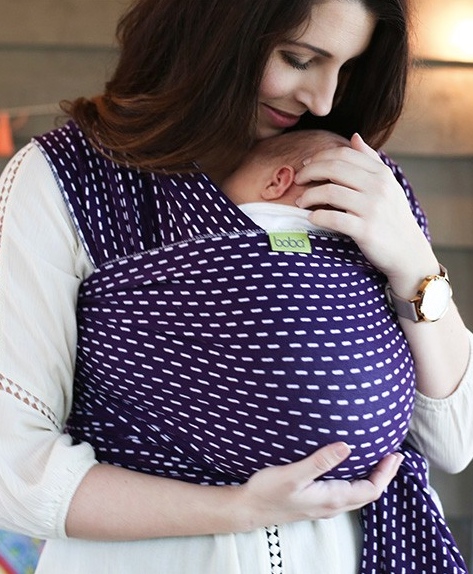
It doesn’t matter whether you’re looking at a stretchy wrap like a Boba Wrap, Je Porte Mon Bebe, Ama Wrap, Hana Wrap – or a woven wrap with makes such as Neobulle, Didymos, Storchenwiege, Colimacon & Cei, Fidella, Little Frog, Girasol, Kokadi, Oscha, Firespiral, Ali Dover, Artipoppe, or what your budget is, the first few times you try wrapping you are going to be on a steep learning curve, and you’ll be worried about getting it wrong.


Why use a wrap?

What you gain from learning to wrap, can be life-changing. Possibly an overstatement, there are alternatives, and the whole ‘having a child thing’ was the biggest lifechanger yet, right – BUT… A wrap can be the best fitting baby carrier for you and your baby, every time. A woven wrap will be the only carrier your baby won’t grow out of – until they stop wanting to be carried that is. It can be the comfiest carrier, and the one you can actually keep on for hours and hours without feeling the strain. One wrap can be used on your front, back and hip. It can even be used for wrapping twins. Together. In the same wrap. The same wrap can be used for snuggly sleepy cuddles with your squishy newborn, then later on be used to piggy-back a grumpy tired toddler home. It can fold up into your day-bag, it can be a blanket, it can be an attractive scarf (kind of!).

When you start to wrap your child in public, people will stop what they are doing and watch in awe. You may feel like they are just waiting for you to drop your child, but honestly, it is a beautiful thing to watch, and a beautiful thing to be able to master.

So let’s look at how to get over your initial fears and worries –


“It’s just a length of fabric, and it’s so long!”

Yes it’s long. Stretchy wraps are normally somewhere around 4.5 – 5 metres, woven wraps tend to be in standard sizes, and a good length to start with is a size 6 or around 4.7 metres. The length of it means you put several layers or passes around to support your baby, and it is nice and secure.

It helps to start in a room with space around you, with toddlers, cats and dogs shut away where they can’t suddenly pounce! And get yourself in front of a mirror, full length is best, so you can watch what you’re doing.

There are shorter wraps, even in the world of stretchy wraps, and a ‘shortie’ can be great for back carries – but let’s not get distracted. Let’s master at least one carry on our fronts before skipping to back carries, OK.


“Won’t all that material trail in the dirt?”

Possibly, yes. But only if you’re taking it on and off. The long tails shouldn’t be trailing on the ground, if you have long bits left once you’ve finished wrapping, they do need threading, tucking or tying back into the wrap. You don’t want to be tripping up on your own wrap job, or have anyone else tread on it.

If all you are doing is nipping to the shops in the car, a woven wrap is probably not the carrier of choice to have to stop and put on in a carpark when its tipping down with rain. If you’re enjoying the sun and having a picnic in the park, and the grass is dry, then taking your baby out of the wrap and popping him back in again and re-tying should be fine.

Most of the time you’ll be wrapping your baby at home before you go out, maybe in a café or restaurant, and you would hope the floor would be clean anywhere like that. Anyway, wraps are washable – just pop them in a zippable pillow case, use a gentle detergent like Fairy, Ecover or an EgoEgg, pop them on a gentle wash, and skip the fabric softener which makes them too slippery. Some blends of wraps will need more care if you pick yourself a good cotton wrap for everyday then you don’t need to worry too much about it getting a bit grubby.  The more you wash a wrap, the more broken-in and supple it will get.

It is also possible to pre-tie carries, pop baby in and then tighten. This is especially useful for stretchy wraps.


“I can’t do things like that, it looks really tricky!”

Any new carry looks tricky and confusing, but when you break it down into individual steps to remember it gets easier.

The standard starting carry for a stretchy wrap is a Pocket Wrap Cross Carry (often abbreviated to PWCC), and a good starting carry for a woven wrap is a Front Wrap Cross Carry (often abbreviated to FWCC). In both of these, the term ‘Wrap’ refers to the horizontal band of fabric wrapping round you, and the ‘Cross’ refers to the X shape you will form. Each of these ‘passes’ is created in order, and with practice, these get easier to remember and will feel more natural. There are 3 ‘passes’ in both these carries, each adding another layer of fabric to support your baby.

There are various ways to finish off depending on where and even whether you knot the ends of the wrap, such as under babies bum, or on your back, or on your front. You can also embellish the carries, particularly useful for back carries, with extra twists, chest belts and tucks, which can help with comfort as well as looking pretty cool.


“I’m no good at knots”

There is no special knot you need to know. A normal double-knot is fine. The same knot you tie your shoelaces with, no bow necessary, done twice. It can be ‘nice’ to tie your wrap in a symmetrical reef knot, it can be useful to learn how to tie a slip knot – but not necessary when you start out. A knot is a knot, and as long as it is done tight enough (how tight do you do the knot for your shoelace?) it will hold your wrap securely.

There are variations of some carries that do not need you to even tie a knot. One of my favourites is this https://wrapyourbaby.com/wrap-instructions/front-cross-carry/


“I won’t be able to get it tight enough”

There is a trick to this. Rather than taking the whole wrap in your hand and pulling on the whole width of it at once, you do it bit by bit, strand by strand.

A stretchy wrap will be more forgiving than a woven wrap, and you don’t really need to worry about tightening it strand by strand, the fabric will stretch to where it needs to go. You can wrap the whole thing and tie your knot before your baby goes in, just pull the cross part out in front of you and make sure it stretches to about 3 or 4 inches (this does depend on the wrap and the size of your child, so feel your own way with this) – if the gap is more you will find the carry too loose and your baby will sit too low on you, if it’s less you will find it too tight to get a good position and you can restrict movement and breathing.

With a woven, you will have ‘rails’ which are the hems on each of the long edges of the wrap. Sometimes these are sewn or even woven in different colours so you know a ‘top rail’ from a ‘bottom rail’. Be careful to not twist the wrap when you do the passes, and keep the fabric nice and smooth across baby’s back, and you will find it easier to tighten strand by stand. If the fabric is scrunched and folded up near baby’s neck and on his back it will be difficult to get it nice and snug, so pull the excess fabric downwards and let it give extra support in your baby’s knee pits.  Find which rail is by your shoulder/at baby’s neck/under baby’s bum etc. and do gradual little tugs through where you are holding the fabric, once you’ve got it nice and tight, all over, tie your knot. The wrap may get loose during the day, just keep checking for where it’s loose, pull the excess fabric towards the knot, strand by strand, and re-tie.


“How can a wrap be as secure as a buckle carrier?”

It can be more reassuring for some parents to opt for a structured carrier because it looks like baby would be safer in it. However be assured that wraps are safe. A wrap is a single piece of fabric. There are no seams to weaken; no buckles that can perish and crack, or get slammed in a car door; no rings to bend or break open. You will find the maximum ages of soft-structured carriers with buckles tend to be around 4 years, or 20kg. Wrap fabrics are tested to the same weight limits, but can actually carry someone much heavier. There are many elements on a SSC that can fail, and you should check all of them before every use.

A wrap can fail too, but not quite to the same extent, and it is unlike to fail suddenly. It may get ‘pulls’ which you can repair, or it may have ‘weavers knots’, ‘skips’ or ‘floats’ in the weave which are down to the nature of the yarn and weaving process, and do not affect the integrity of the wrap. A pull or even a small hole or will not result in your child crashing to the ground, the flaws will get worse gradually over time. If you are worried about any flaws in your wrap then stop using it and have it repaired or converted into a shorter wrap, ring sling or SSC.

If the wrap is too loose you will be able to feel it, and use a supporting hand, until you can tighten or re-wrap. If your knot is getting loose, again it is unlikely to suddenly come undone, but even if it does, the wrap will hold itself quite well until you can get your baby safely out of it.


More about Safety

Carrying your baby in a sling – wrap or structured carrier – is completely safe, when a few common sense guidelines are followed.

You may have heard of TICKS. The TICKS babywearing guidelines have been developed to be a memorable checklist to help you keep your baby safe in the sling. These are:

T for Tight

I for In View

C for Close enough to kiss

K for Keep chin off the chest

S for Supported Back.

Another one I like is Visible and Kissable which is what they promote in Canada; and there is Babywearing International’s ABCs.

Essentially, your child’s airways need to be clear, they need to not be able to fall out of the carrier or sling, and you should be able to see them at all times. So no sleeping while wearing (however temping that sounds!), and you should not put yourself or your baby in situations that could be dangerous, such as riding a bike, riding a horse, swimming, climbing, fairground rides – anything you’d avoid while being pregnant. Positions like the cradle position where the baby is curled up can be dangerous as airways can be compromised, and babies can disappear deep inside a carrier where you can’t keep an eye on them, so keep your baby in an upright carry.

Most of all I would urge any parent to trust their instincts, and if something doesn’t feel right with your child to remove them from the sling, check them over and reassure yourself they’re OK.

If you’re wanting to start wrapping your child on your back, make sure you’re confident in tightening your wrap with a front carry first, and then practice with a doll or teddy on your back. When you’re ready to do the carry with your child, practice over a bed or cushions and have someone close by who can help.


Conclusion

Everyone who wraps their baby was a beginner at some point. It will take some practice before you master the carries you want to be doing. You will have good days and bad days for wrapping; there will be some great carries, some good ones, and some bad ones that you need to scrap and start again with. Keep calm and remember the more you practice the easier it will become.

Before trying a new carrier or a new carry with your wrap, ensure your baby is fed, has a clean nappy and is not so tired she will get fed up and start squirming and yelling in your ear before you’ve finished.

Stretchy wraps are a great way to start, prices are around £35-60.  If you like the stretchy wrap, moving on to a woven wrap can give you a carrier that is versatile and will last and last until your child no longer wants to be carried.  There’s no need to spend hundreds on a woven wrap, there are plenty of affordable wraps between £50 and £70 – so they can be more affordable than soft-structured buckle carriers – but you can spend (lots lots) more if you want to!

Start wrapping on your front, and when you’re used to the methods needed to tighten a wrap securely, then move on to back carries.


Next Steps

A trained carrying or babywearing consultant can help you learn to wrap in a private appointment or workshop, or you can get hints and tips from consultants and peer supporters in a sling meet or sling library session, as well as trying out different wraps.

Go to Top