About Tiffany

I am mum to a wonderfully empathic, sensitive, funny, bright and gorgeous 8 year old - who I carried in a sling from 6 weeks to 5 years old. It is my mission to make beautiful comfortable slings more accessible to everyone, even those who didn't know they needed one! I am a trained Slingababy baby carrying consultant, and own The Baby Sling Boutique which I run alongside being a mummy, and my day job as an analyst in the NHS.

A Natural Treatment for Colic

By |2022-02-06T15:19:52+01:00October 8th, 2019|Why we Carry|

A Natural Treatment for Colic

Does your baby ‘have colic’?  What is colic anyway, and how can you actually help your baby through it?  Is there a natural treatment for colic, and why don’t more people know about this?

Colic in babies is thought to have 4 different types. Did you know that carrying your baby in a sling can actually help with all 4?

1) Digestive colic

This is when your baby feels uncomfortable after feeding, wriggles, cries and pulls her knees up – and cries before having a poo. Carrying her upright in a baby sling will help the milk to go down, and get the bowels working – a bit of gravity does wonders.

2) Physical colic

This can be down to physical distress from a complicated birth, or from being too cramped in the womb. His neck, back or pelvis might be uncomfortable and out of alignment. While baby massage and gentle stretching of his limbs can help, as can osteopathy, so too can carrying in a sling.

A good sling that supports the spine and knees in an optimal position would help with alignment, and at the same time can ease some of the discomfort – and your baby can also get a cuddle and some gentle stroking on the move. Don’t force your baby into a position he finds it uncomfortable to be in, or move his head into a direction he is uncomfortable looking – he will start to move it for himself when he is ready. If your baby finds being held against your tummy/chest straight on particularly uncomfortable then speak to a babywearing consultant about finding another position that he might like better such as a ‘seated sideways’ position.

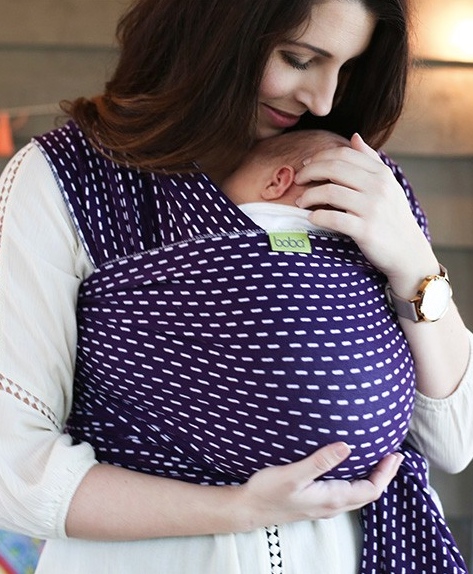
Boba Wrap - Kahla
Neobulle My-Sling - Green

3) Intellectual colic

This is to do with your baby being over-stimulated and the busy world being too much to cope with and understand. Your baby needs to be soothed, and some of the craziness of the world needs to be drowned out – so her awareness is of you and the security that provides.

Holding your baby close, where she can hear your breathing, singing, gentle whispering and talking should help. You could use a sleep hood to block out some of the sounds and lights that she’s finding disturbing.

Your baby might need some help getting into a nap routine so she is better rested and more able to cope – so dig out the sling at a regular time each day and go for a walk or dance round the living room, to lull her to a gentle sleep.  Or if she’s not the kind of baby who responds to a routine, then you’ll need the sling even more so you can soothe her, and connect with her, whatever you’re doing and wherever you are, when it all gets too much.

4) Emotional colic

Your baby is stressed and anxious and needs comfort. Maybe she just doesn’t want to be put down, yet you’ve got things to do, and she cries and cries unless she’s held. Maybe she’s picking up that you’re tired and emotional yourself and feels the stress in the air, and that just makes it worse. Be kind to yourself and give yourself a break from routine and chores. She wants to feel understood and safe. Take a deep breath and relax, you’re doing a great job. And put on the baby wrap, what better place to be than wrapped close to your chest. The oxytocin will start to flow, and things should start to calm.

If your doctor has prescribed medication for your baby, he thinks this is the best thing for your baby.  So don’t stop using the medication without consulting your GP/paediatrician – however using a baby sling should ease some of the causes of discomfort, and the symptoms (i.e. the crying) should start to ease too.  If you see an improvement when using a sling, you can always report this back to your GP, and they may even suggest it to other patients too.

Ready to learn more about carrying your baby in a sling?  Pop along to your local sling library, or click here to see a selection of slings/carriers for newborns.

Do I need a Forward-Facing Baby Carrier?

By |2022-02-06T16:41:24+01:00April 30th, 2019|Choosing a Carrier, How to carry|

Your baby loves to be carried, but he doesn’t like facing you. Put him down and he wants to be held, pick him up and he wants to be put back down.  Sound familiar?  There can be so many reasons why your baby doesn’t want to be held or carried in a sling, but maybe your child just wants to see what’s going on.

In a baby carrier where your baby is facing in towards your chest, he may start pushing away, or trying to turn himself around to look out. When you’re trying to feed him – whether breast or bottle – he might just want to look around and not miss a minute of what’s going on.

This is a tricky time for parents. Your baby is growing, their brain is more and more capable of taking in information, processing and understanding it, and they want to learn. They still want the closeness and comfort of being carried, yet the tummy to tummy cuddles are feeling restrictive.

Should I carry my baby facing outwards in a baby carrier?

When carrying your baby in a carrier, you really want to just replicate how you hold them in arms, and keep that carry as natural as possible.  Support their bottom and thighs, support the natural curve of their spine, and be responsive to their needs.

This can be difficult in a forward-facing carrier, firstly because of gravity pulling your baby’s legs and body down and away from you rather than into a hug like when they face into you.  Their backs may start to arch backwards – ok in the short term, vertebrae are flexible after all, but not something you want day in and day out at a crucial time for bone and joint development.  And when facing away from you, you can miss your baby’s cues for hunger, or the very first signs of distress.

Are there any special rules for facing forwards in a baby carrier?

If you want to carry your baby facing away from you, use only carriers that have been designed to have your baby facing-forward in them. Other options might be to try a ‘hip carry’ (many clip-on carriers do this, plus ring slings or woven wraps), or to carry your baby on your back.

Continue to be aware of and responsive to your baby’s cues for feeds and attention.

And ensure your baby’s face and neck are not obstructed by the carrier body, hood or clothing and airways are clear.

So what else….

How long can I carry my baby in a carrier for?

Keep forward-facing to under 30 minutes. Babies can get over stimulated in the big wide world with so much going on, or they may just get tired and start to be lulled to sleep with the motion of walking and moving for a longer time. It’s best to turn them around to re-connect with you and give them the chance to lay a head on your chest, before you’re stuck with a sleeping child with no head support, or an unhappy child that’s just had enough of everything, and can’t be settled.

If your baby gets over-stimulated or seems unhappy, turn them around or take them out of the carrier.

If your carrier is in a narrow-based carrier, then even in a facing-in position I would recommend limiting the time to around 30 minuntes.

Facing inwards towards you, in a well-fitting wide based carrier where your child’s hips are held in a neutral hip-healthy position, spine is well supported in a gentle curve, legs are not overstretched, and everyone is comfortable and happy, there is no time limit.

What age can my baby start facing outwards in a baby carrier?

Babies who have full head control and are tall enough can face forwards in a carrier. Just because your baby has head control won’t mean they can forward-face yet – you will also need to ensure the carrier fits them well in this position. Their head should be clear of the panel, and the panel edge away from their neck.

At 12 months my baby feels heavy – is my baby too old to face outwards?

After about 12 months, it becomes quite uncomfortable for the wearer in a facing outwards position. By this age, your baby/toddler’s legs are longer, stronger and heavier, and you will find the weight distribution is better if you can carry them in a way where their legs wrap around you rather than pull away from you. Most baby carrier manufacturers will only recommend forward facing up to around 12 months. After that age you would be much better, in terms of comfort and keeping your carrier stitching in-tact, to carry your growing nosey toddler on your back.  Buckle style baby carriers tend to last you up to the age of 2, 3 or even 4, for back-carries.

Can I let my baby fall asleep in the baby carrier?

If your baby falls asleep, or looks or sounds sleepy, turn them around to face you, or take them out of the carrier.  Remember as well that your carrier may need adjusting back to a wide seat position for facing inwards, so don’t leave it until that last minute!

Facing towards you, your baby can sleep with their head resting against you, or if needed with support from a sleep hood.

How do I ensure a ‘good position’ in a forward-facing baby carrier?

If your carrier allows, do a ‘pelvic tuck‘ once the carrier is secure, to get a good position for the hips.  It is possible, and far more comfortable (and healthier), for your baby to have their upper thighs lifted upwards, so their weight is on their bottom and thighs, and not just through their nappy area with their legs dangling.  Some carriers do this better than others; the best one I have come across is the Tula Explore.

Your own physiology may determine how your baby is able to sit in a carrier – think of boobs and tums in terms of a back-rest for your child, and the angle your child needs to sit at to be comfortable.  If you’re not sure, pop down to your local sling library for some advice.

Anything else?

Follow the TICKS guidelines for safe babywearing while forward-facing.

How to Use a Newborn Baby Sling

By |2022-02-06T19:28:56+01:00March 5th, 2019|How to carry|

Most parents these days have a stretchy wrap sling, or similar for their new baby. Maybe they were given it as a gift and feel they ‘ought’ to use it at least a few times. Maybe they did loads of research and found it’s what the professionals really recommend for Baby in the first few weeks and months.

To some people it looks a bit scary, confusing and intimidating. It is after all, a long (long long) piece of fabric with no structure to it, and all you’re meant to do is tie yourself up in it, and then secure with a knot. “Is that really safe??” “Is that going to hold my baby?!” I do know that some parents coming in to the sling library are put off and want something ‘more secure’. These parents then find themselves looking for a structured carrier that is 4 times the price and doesn’t fit baby nearly as well.

The brilliant thing about using a stretchy wrap is that it does stretch, so you can get away with some fairly rubbish attempts at wrapping – and it will still hug your baby in close to you. It can fit any size wearer, so don’t worry about carrying your baby weight still, don’t worry if Dad is 7 foot and you’re a petite 4 foot 9. Don’t worry about harsh fabrics that will rub your baby’s delicate skin, as they are soft to the touch. And don’t worry (too much) about a C-section scar, as you’ll be carrying baby nice and high, well away from that area of your tummy. You can even get lighter versions of a stretchy wrap too with soft breathable bamboo, which are great for summer or if you have a ‘hot’ baby.

Parents who use a stretchy wrap are doing an amazing thing for their new baby. Babies often don’t want to be put down, as if they know all the good stuff that happens when they are held close. There are things to look out for though, and identifying and correcting these will enhance your carrying experience. And rather than wanting to move onto another carrier at 3-6 months, as I find many do, you can use your stretchy for at least 10-12 months and maybe more.


1) Carry baby nice and high

Your baby should be high up and close enough to kiss. This way they won’t disappear into your cleavage with potential suffocation risk. But also, a new baby can only see 20-30cm away, and she’ll want to get to know your face and expressions, it’s all brand new to her, the world’s a big blur, and you’re the best thing ever.

The height some people secure a carrier, whether a wrap sling, or a buckle-up carrier is quite a low position supported on their hips. This is too low! It may well be where you buckle a rucksack when you’re backpacking around the world – as actually this is closest to your centre of gravity and can help your balance.

Hold her in a sling where you would hold her without a sling. You’ll normally find, especially with a baby with little or no head control this is pretty high, maybe higher than you’d expect for a sling. A good height is where she can rest her head on the top part of your chest.


2) Baby faces towards you

In most stretchy wraps facing outwards is a no-no, they are most secure facing inwards towards you.  I know that some wrap companies do include this as an option in their instructions, but also some have removed it. For me the wrap doesn’t provide enough support to keep baby in the right position, and it’s not something I would teach. Plus only babies with good head control should be facing outwards in a baby carrier, which a newborn will not have.

There are other alternatives, including wearing baby high up on your back, or a hip carry, that give baby a lovely view of the world, without compromising the J curve of their spine, or hip socket position. However, only use these positions if the sling instructions specifically detail how to do this.


3) The sling fits snugly

This goes along with baby being high enough. If you haven’t wrapped the fabric tightly enough, then baby is going to start sagging in the wrap when you start to move around. And baby can end up too low down.

But your baby could also be at risk of falling out of a loose sling, or slumping down in the sling with no support for the back or neck. To check, gently place a hand on the back of your baby’s head to support it and bend forward from your waist. If there is a widening gap between you and baby then you’ll need to tighten the wrap. If you feel baby is too loose then don’t let go of them until you have adjusted the wrap (or take them out and start again).


4) Shoulder Straps are supportive

One of the reasons your baby could feel too loose in the carrier, is that you have the wrap fabric spreading down your arm. It can be nice to spread the fabric so it ‘cups’ your shoulder, but do ensure the ‘straps’ that carry baby’s weight are available to carry the weight and not flopping down your arm. A quick fix for this is to actually pull the fabric all the way down the arm, like a full bat-wing, then fold it in half back on itself, and if you can fold it in half back on itself again. This ‘sandwiching’ of the wrap can be a nice neat way to wear the wrap.


5) Seat spreads from knee to knee

The wrap passes also need to spread from one knee pit right across the bottom to the other knee pit. Both of them. This is important, so you are giving your baby a proper 2 layer ‘seat’ to support their bottom, which also supports their thighs and keeps their hip socket in a neutral resting position. The shape from baby’s foot to knee to bottom to knee to foot should trace an ‘M’ shape.


6) Baby’s back is curved

Your baby’s spine has a natural curve that gradually straightens out as they develop head control, learn to roll, learn to sit, crawl, stand and walk. This ‘J’ shape should be maintained in any carrier, rather than pushing it to be straight. Carriers that force the back to be straight are normally too tight in the wrong place, or allow your baby’s legs to be straight(er) and not in the M shape described above. To achieve the M shape for hips and J shape for the back, you can do a ‘pelvic tuck’ – reach inside the sling with both hands, pull your baby’s knees up and towards you while also tucking your baby’s bottom downwards and away from you.


7) You can fit 2 fingers under baby’s chin

Newborns do arrive pretty scrunched up! So their spine can look more like a C than a J. Support their natural shape, with knees high up in a froggy position, but also keep their head up so it doesn’t drop down onto their own chest. You should always be able to get a couple of fingers under your baby’s chin, to ensure they are not slumping down and blocking their airways.


8) The sling is supporting all the way to baby’s neck

The 2 cross passes that create the X your baby sits on, should spread across your baby’s back. The ideal height for a carrier for a young baby is for it to be at the nape of the neck. A V shape gap will inevitably appear with this style wrap, but it’s best not to start off with this gap. If you see or feel it slipping then pull the fabric up again. Your baby’s shoulders and arms should be inside a sling of this type, with the wrap passes covering your baby’s back.


9) Always use the 3rd layer

This is so easy to forget to do with the ‘wrap alternatives’ like a Close Caboo or Papoozle. There is a separate layer than is meant to tie around your baby. This is an important part of the carrier. It provides extra support for your baby’s back, should the 2 cross passes that create the X start to shift out of position. It’s also another layer supporting the weight under their bottom. So please don’t leave it off.


10) Straps do not cover baby’s face

Once you’ve tied the wrap, getting it nice and tight and securely on your shoulders, you can find you can barely see your baby’s face because it’s buried under the wrap straps. Because the fabric’s stretchy, it can be moved away from your neck, and away from baby’s face, and moved or folded out the way. Or go in underneath the strap with your hand, grab hold of the wrap where it’s close to baby’s face, and pull it back out, reversing the fabric. This little trick tends to hold out the way better and doesn’t ping back. So now you can check what the little guy is up to, whether he’s sleeping or not, and ensure there is nothing in the way of his nose or mouth, and that he can breathe ok.


11) Don’t use snowsuits or thick clothing

Snowsuits and baby slings do not go together. Yes they look cute and cosy. But they will force your baby into a starfish position, and it will be pretty impossible to get a good M shape for their knees, which in turn means the spine will probably straighten up.

But mostly my issue is one of temperature control, and your baby overheating. A stretchy wrap, with its 3 layers, is warm and snuggly by itself. You would be much better to ditch the snowsuit when using the carrier and layer up instead. A few thin layers that can be removed, plus your own cardigan/jacket/fleece/coat covering the both of you works best with this kind of carrier. Your own body temperature will keep your baby warm better than a thick snowsuit or coat, and you’ll be able to feel when it’s getting hot (or cold) inside your shared cocoon, so you can adjust your clothing. Babies and even older children just aren’t aware of their own body heat, and may not necessarily complain. And babies don’t sweat or control their own temperature very well.


I do hope this helps allay any worries, but if you feel you still need some help with your stretchy wrap then do find a babywearing professional.  Sling libraries can be a great place to get advice, or you may find you want more time with a babywearing consultant and want to book an appointment or a place on a workshop.

Above all, please do carry your babies high, tight and in view – as per the TICKS guidelines.


Are you looking to buy a stretchy wrap? I have some really lovely quality ones here.

Help your Baby Sleep Better

By |2022-02-07T11:33:46+01:00February 12th, 2019|Why we Carry|

‘Is he sleeping through the night’?

‘What time does she go down for a nap’?

‘Are you still breastfeeding him to sleep’?

‘My baby just seems to want to sleep on me’!

‘My baby doesn’t seem to like much – apart from me that is!’ ….. sound familiar?!

Now I’m no sleep expert, but these sorts of questions and thoughts are just annoying when you have a new baby – and even more annoying when it’s an older baby/toddler. Not least because they are non-issues. Bear with while I explain…

Your baby probably won’t ‘sleep through’ for 10 hours like a teenager or you’d like to as an adult; this is normal. Your baby will nap when they need to; this is normal. Your baby will get all kinds of nutritional and emotional support by being breastfed on demand for several years; this is normal. And your baby will be comforted by cuddles and physical touch; this is normal. You will feel tired, this is normal – but there are things you can do to help yourself, and worrying about your child’s sleep patterns because of other people’s misinformed opinions isn’t one of them.

My daughter didn’t get into a routine until she was in nursery at around 18 months old, older even. We had a certain ‘rhythm’ to our days, but it wasn’t what I’d call a routine, there was no set nap time, no set bedtime. We just went with the flow. If we had a busy day one day then we’d have a quiet day to ourselves the next to recharge.

And the result was she didn’t look tired like some babies do. The quality of her sleep must have been pretty good. She was happy, and I think she did actually sleep very well. She slept in sleep cycles, as we all do, sometimes she woke up properly after a sleep cycle, sometimes she snoozed on and slept for longer. It wasn’t what I thought having a baby would be, before I had a baby – but this is how I helped her sleep better…

1. Naps on the go

Oh my goodness, the first time my baby fell asleep in a stretchy wrap was amaaaazing. I was finally able to get out and about while she had a nap. For us, this meant I took a walk most days – if she hadn’t already dropped off in the car coming back from a baby group then we’d go out for a walk. I managed to get a little bit of exercise, fresh air and Vitamin D so I felt better, and she couldn’t keep her eyes open once she was wrapped up close to me and we got moving. After 40 minutes of sleep she’d stir as that sleep cycle ended, so I needed to make sure I was still walking at that point so she dropped back off again.

2. Movement to lull  her to sleep

Rocking your baby seems to be frowned upon. I’m not sure why. There will come an age when your child is to big to hold, and too heavy to carry – so please make the most of it when they are small! The only thing might be your arms start to ache. So use a baby carrier, and wander or dance around gently. I used to use a short size 2 wrap or a ring sling, for a hip carry. She used to be able to look around until tiredness took over, then rest her head on my shoulder and drop off to sleep.  The theory then was I could un-tie the wrap/sling and gently lay her down in it; while I’m sure I achieved that a few times, mostly I would enjoy the warmth and the cuddles and get on with something else or make a cuppa.

3. Breastfeed to sleep

If you’re boobing your baby to sleep then this can be a fantastic way to relax and soothe your baby into a deep slumber. Higher melatonin levels in milk produced at night will help your baby to sleep, whereas milk produced in the morning will make your baby more active.

Not only this but the suckling itself is calming, and calm babies will find it easier to drop off. People who say that your baby is just using you like a dummy have somehow missed that point. The breast is a far better ‘pacifier’ than a piece of plastic, and your bond will deepen due to the pheromones exchanged during feeding.

Often seen as one of those ‘rods for your back’, but far from it, breastfeeding your baby to sleep will make your life easier.  It took a long time for me to feel that this was not only OK to do, but a wonderful and beautiful thing, and I am so glad we we able to do this for so long.

I also managed to breastfeed in a wrap and baby carrier on our walks, to help her drop off.  Most carriers can be used for breastfeeding – you should return your baby to an upright position when they’re done/are asleep, and run through the TICKS checklist.

4. Co-Sleeping

We went against all advice at the time, and ended up sharing a bed with our daughter.  For the first 3 months I was getting up several times a night, and sitting up for an hour or more in a dark nursery, feeding, then waiting for her to go back to sleep before I could move.  I read alot on my Kindle! But I exhausted.  All this time breastfeeding wasn’t great and we were topping up with formula, I tried pumping but it didn’t work for us.  When we ‘gave in’ and took her into our bed, I was able to feed her without getting up, and fall back to sleep sooner.  We got more sleep, and my milk flowed better and we ditched the formula feeds.

Luckily now, co-sleeping is less frowned upon, and there are published guidelines to follow – please do read these before sharing a bed with your baby.

5. Hold your baby

I had a baby who didn’t want to be put down, and wouldn’t sleep without being close to someone else.  The result, we held her – alot.  We literally had to carry her everywhere.

Carrying your baby, in your arms or in a sling/baby carrier, does amazing things though. Your baby responds to touch and being cuddled by releasing oxytocin. Otherwise known as the love hormone this makes you feel safe, secure and loved. And if you feel safe, secure and loved, you are more likely to sleep well and sleep for longer. I know I do. Carrying your baby at any time of day, nap time or not, will help with levels of oxytocin, and then when it’s time, sleep is easier.

6. A calm and quiet environment

I think I’m a fairly calm person anyway, and we have a quiet household, but I used to sing, chat, hum, have background music or TV on but not too loud, and we’d have the lights down low in the evening.  However when I left the house often the calmest environment I could provide for my daughter was in the sling.  Tescos or the highstreet are not known for subtle lighting and mellow acoustics!

If you have older children and pets who are constantly on the go, it may be more difficult to keep the noise down even around the house.  Your baby might want to join in, and be part of all the fun stuff, but eventually it will all become too much for them to deal with, ending in tears.  But you can create a calm oasis in a sling/baby carrier in an otherwise noisy and crazy world.

A nice comforting cuddle with mum or dad can be just what’s needed to block out the outside world, reduce cortisol production, and get baby in the mood for sleep.


Want to know more?

The link for the Lullaby Trust information on Co-Sleeping is here again for you.

If you want more advice on how to choose a suitable sling for your age child then visit a sling library, or contact a babywearing consultant. What’s a sling library? – read more here. Want some help getting your sling to work better for you and your family? – then do contact me.

What’s a Sling Library? Your questions answered

By |2022-02-06T15:42:38+01:00February 5th, 2019|Choosing a Carrier|

Are you wondering about getting a sling for your new baby? Maybe you already have a carrier, but you feel it’s not right for the age of your child and you’d like to try another. Maybe you’ve had one recommended by a friend, but it’s more than you wanted to spend and you’re reluctant to pay out.

The thing about slings and baby carriers is they’re a bit like jeans. There are lots of brands and styles out there, some cheaper than others, some worth the investment – but also some, where you’re paying for a label but actually they’re pretty uncomfortable. When you buy a pair of jeans, you need to try them on, regardless of what size it says it is – you know they’re all different, and will probably end up not buying the ones you picked up first.

But where and how can you try on a sling before buying it? One answer, and still one of the best kept secrets in many areas, is a sling library.

I’ve heard of a Sling Library, what is one?

The word ‘library’ conjures up an image of a silent, formal space. Believe me, a sling library is neither formal nor silent!

You may find a sling library attends one of your local baby/toddler groups, or it may be at a local café or soft play area. You will find a collection of different types and styles of baby slings and baby carriers, available to hire. You may be able to browse the carriers by yourself, and/or you can ask a babywearing consultant or babywearing peer supporter for some guidance.

The idea is that you get to see a whole range of baby carriers, not usually available in the shops. Even if you’re intending to buy online, visiting a sling library can save you time and money, as you can try on carriers, before committing to buy. Even if you’re lucky enough to have shops like John Lewis, Mothercare, JoJo Maman Bebe close to you, they’re not going to be very pleased if you take all the carriers out their boxes and insist on trying them all on. They’re also not going to let you return the carrier once you’ve used it.

You can hire the carriers from a sling library for a small fee and most libraries will either ask for a deposit or a membership fee, just to cover the risk of damage or the sling going missing. Hiring a sling will help you to find out how easy a carrier is to use, and how comfortable it is – a trial period before you decide if that’s the sling you want.

Is a sling library run by the council? Do they make a profit?

These are privately run, and nothing to do with the council. Some are run as not-for-profit organisations, and any money raised from the hires will go back in to buying more carriers, and paying for the venues. Sometimes the babywearing consultants will be paid a small amount, but mostly they work on a voluntary basis for the reward of helping people and sharing the love!

Some sling libraries are run alongside babywearing consultancy business and baby carrier retail businesses. Whatever type of organization, hire fees are small and the nominal amount of money raised through fees and membership will just help to keep the library running, and keep the slings clean and safe. Where a sling library is linked to a profit-making business it is likely that the sling library benefits from a small investment from the commercial side of the business, and may be able to have more newer carriers within the hire stock.

So who runs a sling library?

Sling libraries will normally be run by parents who have used slings with their own children. A sling library can be run by babywearing peer supporters who have taken a basic training course, or babywearing consultants who have undertaken more training and are experts in the field. Larger sling libraries will have a few consultants and a few peer supporters.

What can I expect at a sling library?

A sling library is normally a drop-in session. However for busier larger libraries, you may need to book a time-slot in advance, so do contact your library before turning up to ensure you don’t have a wasted trip. It’s a good idea to get there well in advance of the end of the session, so you have enough time before they need to pack up. Allow at least 20-30 minutes to find a sling and arrange a hire.

You may be able to browse the slings yourself, or you can ask one of the peer supporters or consultants for some help. They will guide you towards suitable slings, give you pro’s and con’s for the carriers, and can demo them for you. Depending on the library and how busy it is, you may need to put your name on a list and wait your turn, so take some cash for a coffee, relax, feed your baby and chat to the other mums and dads waiting with you.

Do I have to pay?

There may be an entry/advice fee:

  • Some sling libraries will ask for a small entry fee, which covers the sling consultant’s time, and may go towards the cost of hiring the venue and may also pay for a hot drink. If the sling library is attending a baby group that has an entry fee then you will be expected to pay for entry to the group.
  • Some sling libraries offer a membership scheme, where you can pay a one-off or regular fee, and benefit from lower hire fees, and lower or no deposit.
  • Some sling libraries may ask for a small fee if you are taking your own carrier along and not intending to hire from them. This is just to cover the cost of the time spent with you.

You will also need to pay a fee for sling hire. This can be around £5-£15 for 1 or 2 weeks, or more for longer hires.

There is usually also a deposit to pay. This covers the cost of damage or a sling getting lost. The cost varies between libraries and can be different for different slings. Bear in mind though that if you have paid no deposit or just a small one, if a repair or a replacement carrier is needed following some mishap while in your care and the deposit you’ve paid is not enough to cover expenses, you may be invoiced once the carrier is returned. Sometimes the deposit is waived if you are able to pay with a card – and again be aware the cost of any damage/loss to a hired sling can be charged to your card.

Free stretchy hire:

  • Some sling libraries will hire stretchy and newborn slings for free for low income families. Do check in advance if such a scheme exists in your area, and whether you would qualify.

Should I stay for the whole library session?

There’s no need to stay longer than you want to. You will usually be able to get a coffee and your baby/toddler can play while you chat to other mums and dads. It can be nice to go with a friend so you have someone to wait with; it can be nice to make new like-minded friends and maybe arrange to meet there regularly; or it can be equally as nice to take a book and relax by yourself while your baby sleeps. But if you’re in a rush, you need to leave because your baby needs to nap or feed, or the social side of these events is not for you then do not worry. No-one is going to mind what you do or how long you stay for!

My baby is due be taking a nap at the time of the sling library, do I need to wake him?

Sling libraries will have weighted dolls you can use to mimic the size and feel of a real baby in a baby carrier. These are a great way to practice with a new carrier, and it saves putting your own baby in and out of multiple carriers while you find one you like. So no, you don’t have to wake or upset a sleeping baby. Your baby can rest on a blanket or in the play area, in your buggy, or it can be helpful to bring someone with you to hold the baby when needed. Peer supporters and consultants are also pretty willing volunteers for holding babies!

Where do I find my local sling library?

The place to look first is The Sling Pages map. Google is your friend too! Or ask in your local parenting group on Facebook. Another good place is NetMums, where you can search in your local area for ‘Sling Libraries & Support’. You could also ask any sling library you find if they know of any more closer to you, and they should be able to find out for you.

I can’t get to the sling library – what can I do?

It’s still worth getting in touch with your local sling library. You may find they can offer appointments outside of the published library times, or you may be able to arrange a hire and pick it up or have it dropped off to you. You may be able to book a virtual session via video call.

There is no sling library near me – what can I do?

Some sling libraries offer postal hires. Some retailers offer ‘try before you buy’ incentives. You may be able to book a virtual session via video call.

Here is our own sling library, bookable online and slings are available to pick up from BN27 or can be posted.

I didn’t get long enough at the sling library to try everything – can I come again?

Sure, there’s no reason why you can’t go to every sling library session until you have literally tried on and hired everything. Your babywearing peer supporters and consultants can help you with which carriers might be more suitable than others. It is a very personal thing and it can take some time to find out what you like about a carrier and what you don’t like, and you may want to do a few hires before you find a carrier you love. You may also want to come back when your baby is a bit older as your needs will change as your baby grows.

I didn’t get long enough at the sling library to try everything – it was really frustrating

If you would rather, you can book a private consultation with a babywearing consultant. This would give you a longer session, dedicated to you and your family’s needs, to explore many more options. These are invaluable if there are additional health or developmental needs, but anyone can book a private session and benefit from the expertise of a babywearing professional. Your consultant may also offer workshops or masterclasses, if there is something in particular you want to learn and practice in a dedicated space with others. Or they may be willing to set up a workshop for you and some friends with similar age babies to spread the cost of a consultation between several couples. Follow up with your sling library to see what other options they can offer you.


What’s in the Terms and Conditions of Hire?

All sling libraries should have terms and conditions of hire, but are you going to have time to read this when you’re in the middle of a busy library session? – probably not. Standard clauses include:

  • Don’t smoke while wearing the carrier
  • Keep the carrier away from pets
  • Don’t wash the carrier – this may come as a surprise as you’ll want to look after it and keep it clean. However if the carrier is damaged in the washing machine you will probably end up having to pay extra. Most sling libraries like to know what their carriers are washed with, and use only skin-kind and eco products, and would rather do this themselves. If you have a disaster with poo or sick that does need to be cleaned up sooner rather than later then contact your library to find out how they would like you to wash it. You can spot-clean the carrier; some libraries may also provide drool pads to help protect the carrier from dribbly babies.
  • Your deposit/membership covers damage or the sling going missing, but you may be liable to pay extra if the deposit is not enough to cover costs if the sling needs replacing or repairing – so look after it!
  • Return the sling on time. If you return the sling after the expected return date, you may need to pay ‘late fees’ plus additional hire fees. Keep in touch with your library if you are not going to be able to return the carrier as planned.
  • Read the sling instructions before use, and only use the carrier in a way shown in the instructions or shown to you by a slings professional.
  • Don’t lend the carrier to anyone else while it is on loan to you.


Where can I buy a carrier from?

Your sling library may retail the carrier you have hired – so do ask. They may be able to offer a loyalty discount if you have hired from them, which can save you more money than you can get by shopping around (and it also saves you time and effort too!), and if there are any problems with the carrier then you have a friendly face and a real person to deal with, not a computer.

Even if your sling library doesn’t retail the sling you are after, they should be able to refer you to a trusted retailer, and may be able to pass on a discount to you – again, it’s worth asking!

Amazon and eBay can be tricky places to buy from, here’s a blog I wrote about buying from these sites/apps.

Need to know anything else?

Our sling library sessions are running virtually, slings can be picked up from BN27 or can be delivered.

Summer Slings and Babywearing Tips

By |2022-02-06T15:40:50+01:00July 13th, 2018|How to carry|

  • Carrying your baby this summer?
  • Is your stretchy wrap or baby carrier too hot?
  • Wondering what sling to pack for holiday?
  • Need to get through a busy airport with a baby?
  • Planning some day trips for the summer holidays with your family?

Summer Slings and Baby Carriers

Choosing a baby carrier is difficult at the best of times, but trying to pick one for summer adds a whole new problem – how do you and baby stay cool enough?

A common problem with some of the carriers bought from ‘the highstreet’ is that they actually make you really hot.  Black carriers, made from a thick artificial fabric, and sometimes a bit spongey(!) – tend to get sweaty and uncomfortable in the heat.  Even the carriers you love in cooler weather, the Moby wraps, the Close Caboos, can feel a bit hot.

  • Here are some alternatives to the carriers you might see in the shops, that we love in the summer:

    These carriers are either made with a mesh fabric, which allows air to flow, or are just natural fabrics which are breathable. All are nice and lightweight – some will even pack up nice and small for a bag or a suitcase.

Summer Babywearing Tips

So now you’ve got your carrier, here are some tips to carrying your baby in a sling over summer and on holiday.

🌞 Stay hydrated. Baby and you need to drink loads to make up for sweat lost. Breastfeeding mums, prepare for lots of feeds by drinking water throughout the day. Your milk will water itself down and there’ll be more of it – almost as if nature is prepared for this! There’s no need to give a nursing baby extra water, if you’re not weaning them yet, boobie milk is just what they need. But they’ll need plenty of it, day and night.

🌞 Stay in the shade. If this means staying indoors over the hottest part of the day then do that. It can be cooler to draw the curtains and close the windows, keeping it around 22 degrees indoors – instead of letting in the 28 degree heat from outside by opening the windows and doors. Then open them wide when it starts to cool off in the evening.

🌞 Sun cream is needed if you’re in the sun. But it won’t keep you cool. In fact it makes you hotter. So if you’re in the shade you don’t need it. A little bit of sun (20 minutes is enough) will give you a well-needed dose of vitamin D. We all know the dangers of too much sun but sometimes people go too far the other way – we really do need vitamin D for healthy bones and our immune systems. Just please don’t get burnt people, and remember baby’s skin burns easier than ours.

🌞 Sunhats and sleep hoods are great protection from the sun – if you’re in the sun. If you’re managing to stay in the shade, you won’t need them. Wearing a hat or covering your baby’s head will keep them warmer than not wearing a hat. But if you are in the sun, choose a hat for them that also covers their neck.

🌞 Dress your baby in just a nappy. This does mean your baby’s neck, back and shoulders are now exposed, so keep them in the shade, or use sun cream.

🌞 Dress yourself in as few layers as you can get away with! A strappy vest top is perfect.

🌞 Choose your carrier to suit the temperature. Did you see my list above?  Thinner single layer carriers are good, some have fabric designed to keep you cooler, such as a cool mesh or the solarweave that Connecta do. Ring slings are a single layer. Padded shoulder straps can feel hotter and get sweatier! Same goes for thick padded waists. Fabrics like bamboo and linen will also be cooler, same as with clothing. But a pure cotton carrier is fine too. A stretchy wrap with its 3 layers can feel particularly warm so thinner wraps like Hana and Boba with bamboo can be better.

🌞 It may sound a tad gross! … But your sweat will actually help keep baby cool. You can put a muslin cloth between you and baby to soak it up, or your t-shirt will do it.

🌞 If you have to go out and there is no shade, carrying a parasol or umbrella can be a great way to keep you shady.

🌞 Use a fan. A bit of breeze will help sweat evaporate, which cools the skin.

🌞 A great way to cool yourself down is to cool down the insides of your wrists – so pour cold tap water on your wrists, or hold a water bottle against them, then do the same for your baby.

🌞 If it feels too hot to carry then don’t – but remember buggies get hot too. Often made of artificial fabrics they can get sweaty. If you’re covering your baby’s buggy because you’re out in the sun then make sure there is lots of fresh air for them, and check them regularly. You may find you baby is cooler being carried because they are up in the air and getting a breeze; you can also keep a very good eye on them.

Don’t forget – always carry your baby so they are Visible and Kissable.


We hire slings and baby carriers at The Baby Sling Boutique, from £5.  This could be just what you need to take away on your holiday, or you may want to try a few different slings before you are ready to buy your own.

Baby Slings – A Beginners Guide

By |2022-02-06T15:44:20+01:00April 11th, 2018|Choosing a Carrier|

Baby Slings – A Beginners Guide

What is a sling?

A sling can come in many shapes and sizes. As the owner of The Baby “Sling” Boutique, I use the word ‘sling’ to mean any of the tools for carrying your baby, where you can have both your hands free. For me it covers fabric baby wraps, structured carriers with buckles or ties, and everything in between. Some people use the term to just mean ring slings, pouches or stretchy wraps. Other words you might hear for the same kind of thing are baby carriers, ring slings, backpack carriers, meh dai, mai tai, hybrid carriers, onbu or onbuhimo and papoose to name a few.  There are also hip seat carriers, but as these are a ‘carrying aid’ needing a supportive arm, and don’t support a child’s back, I don’t tend to class them the same as a ‘sling’.

Brand names you might hear are Baby Bjorn, Ergobaby, Close Caboo, Infantino, Moby, Manduca, Baby K’Tan, Lillebaby, Chicco. There is also Beco, Boba, Neobulle, Je Porte Mon Bebe, Scootababy, Connecta, Integra, Hoppediz, Isara, Didymos, Lenny Lamb, Little Frog, and lots lots more.

Sadly a sling is one of those bits of baby equipment that everyone seems to buy but not everyone uses.

Why would you want one?

The first reason is that slings are convenient. No-one really tells you when you’re expecting your first child just how much they want to be held. We talk about there being a 4th trimester, which is the first 3 months after being born. Your baby is adjusting to being outside of the womb, and is still comforted by gentle movement. They find the warmth and touch of a parent or grandparent, and familiar sounds like your heartbeat, voice and breath calming. In the early weeks, a baby will sleep lots, and will probably fall asleep in your arms time and time again. If you can get your baby to nap in a sling during these early weeks it will really help you, even if it’s just a chance to get up from the sofa and make a cup of tea, or get to the loo!

As time goes by, your baby will go through developmental leaps, where their brain changes and their world as they knew it is turned upside down. Everything that was familiar is now bigger and more confusing, and while they figure it out and make sense of it all, the only constant is mum or dad. They will generally want to be close to you more than ever during these times. Then there’s teething. And illness. And immunisations. And being out in new places, or meeting new people. Your baby will want to be held and carried, possibly more than you will realize. And a sling will give you the ability to carry them, while also being able to use your hands for other things and get on with doing stuff. Even on days when you want to use the buggy, tuck a sling in your bag, just in case your baby wants to be held is not happy to be left in the buggy (yes it happens – lots!) More than just for the 4th trimester, I think a sling is just as necessary for ‘the first 1,000 days’, and beyond.

From mum or dad’s point of view, a sling can be useful for walking on the beach, woods, fields and anywhere you would struggle with a buggy. It can be useful when shopping, on holiday, going through airports, going to music festivals, taking an older sibling to the park and the school run, and for hopping on and off public transport.

Being held close to mum or dad (grandparent, childminder, etc etc) also helps develop a string bond between you. It helps with breastfeeding – from a biological point of view, it increases oxytocin and helps milk production and let-down. From a practical point of view you are able to feed on the go, using the sling as additional support. Oxytocin released helps counteract the stress hormone cortisol, and help your baby to relax and sleep better. The upright position your baby is held in can help with reflux and colic. Your baby will also learn about the world, pick up on body language and develop listening and language skills, as well as gaining better balance from adapting to the gentle movements.

Almost surprisingly, carrying your baby in a sling is also good for you. The oxytocin will get to work on you, reducing stress and helping you sleep better. You probably won’t even notice the extra calories you are burning, and the muscle-tone you are building, if you start carrying your baby as a newborn and carry them regularly. There are sling exercise classes now all over the country, but walking every day if you can with the sling will benefit you just as well, and help your cardiovascular system and mental wellbeing. The positive effects of carrying a baby during post-natal depression are also well-documented.

The list goes on and on… I have written a couple of blogs about this which can be found here.

I’m also going to mention the price. Parents-to-be will spend a lot of time and a lot of money picking a travel system – hundreds of pounds – just on a buggy. A quality stretchy wrap can be bought, new, from around £35. A new ring sling can be around £45-£50. You don’t need to spend much at all, and you don’t have to compromise on quality or safety if you only have a small budget. With a sling you love, you may find you don’t even need to use a buggy much, if at all!

Which sling is best?

There is no ‘best’ sling. There, I’ve said it.   Everyone is different, every baby is different.

For a newborn, we generally recommend a stretchy wrap. These are soft, will fit any size adult, and will support your baby’s delicate spine and back gently. They will provide a nice wide seat where your baby’s hips are kept in a healthy position for development. These will last you up to around 8-10 months, although some brands are sturdier and will last for older babies and toddlers.

JPMBB Basic - Crimson Red
JPMBB PhysioCarrier - Elephant/Blue

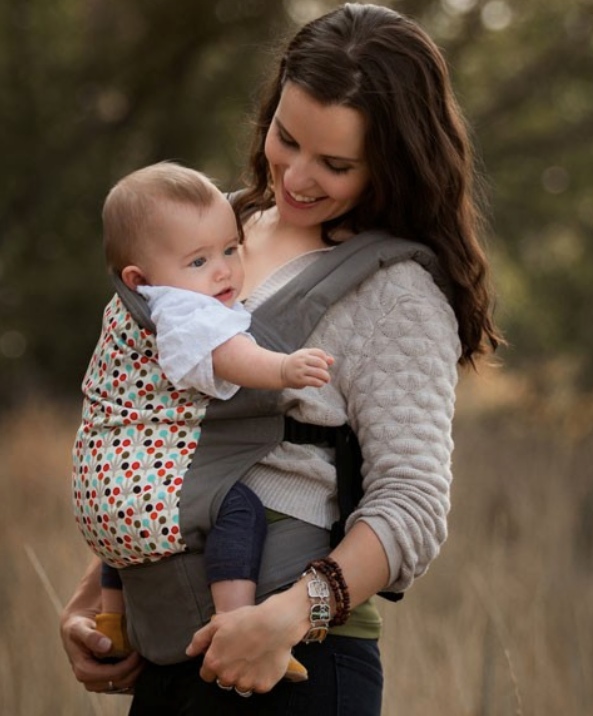
Other options for a newborn include a soft-structured carrier like an Ergo, where you fasten a waist belt around you, there is panel that supports your baby’s bottom and back, and it clips and tightens using buckles. You gain points here for convenience, but you may also lose a few points in good positioning and support.

Beco Gemini Plus One

A more versatile version of this is based on an Asian Meh Dai style carrier, where you tie the waistband around you, a similar panel supports your baby’s bottom and back, and the shoulder straps tie with a double-knot. These carriers can adjust easier to a growing baby, some better than others, and can also be transferred easier between mum and dad say, and often provide a better position for your baby. These are a good compromise between convenience, comfort and positioning; a good all-rounder.

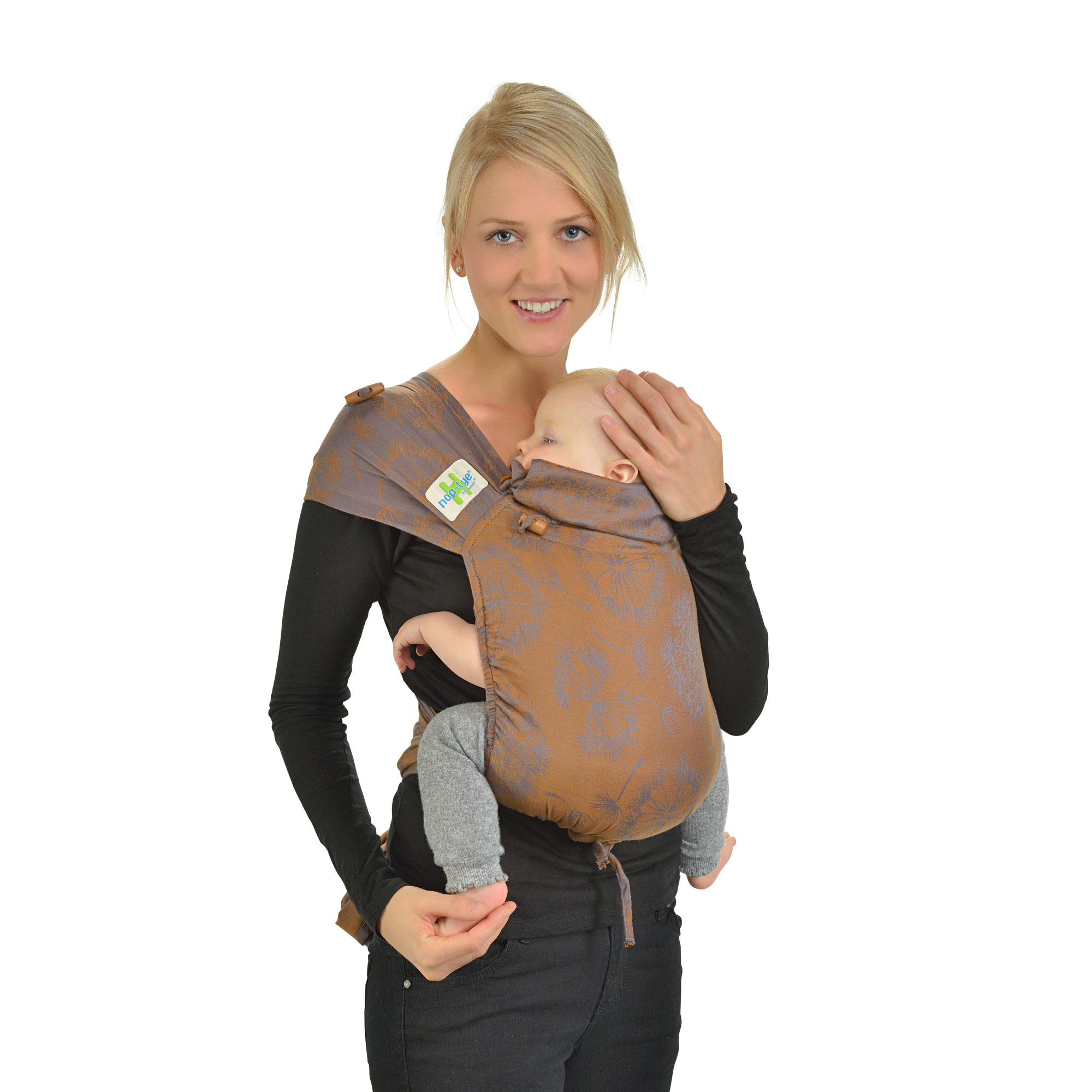
hop tye chicago gold limited edition

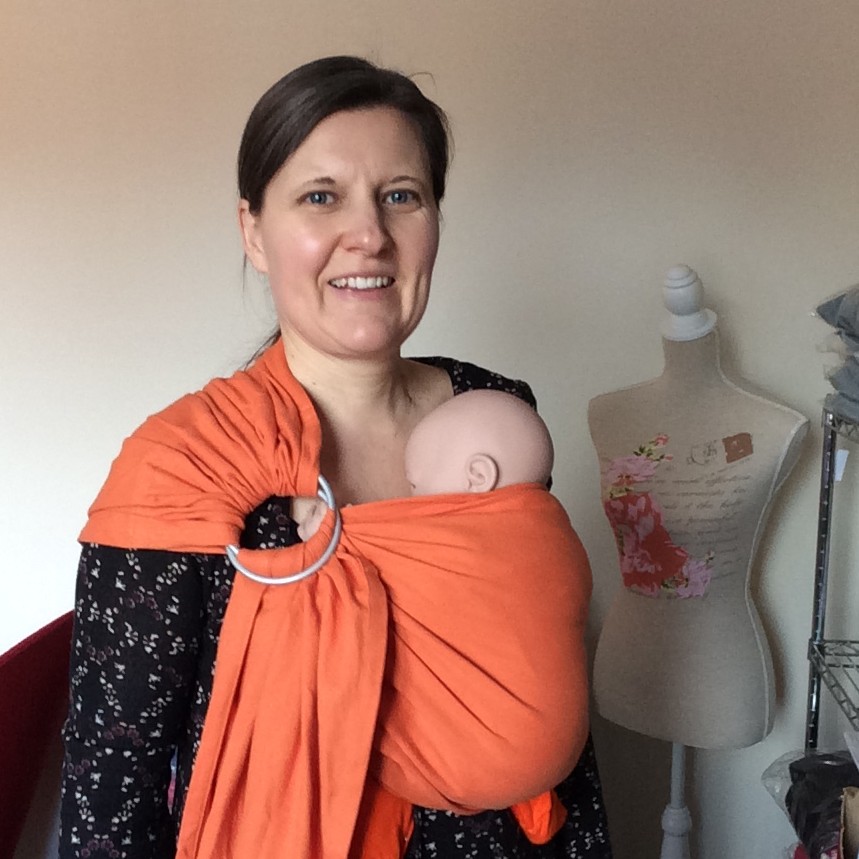
One of my favourites for a newborn is a ring sling. This is a one-shouldered fabric carrier that adjusts using rings. It can create a lovely deep knee-to-knee seat for your baby, and support the curve of their spine. These can be great for breastfeeding on the go, and will last and last right up until toddler-hood and beyond. You win points here for being quick to use and lightweight, but lose some for being one-sided and for having to master a new skill to tighten it well.

Little Frog Ring Sling - Obsidian

There are also wraps made of a long length of woven fabric which although not soft and stretchy, will provide better support than a stretchy wrap, and usually enable you to carry your baby for longer during the day than a soft-structured carrier. The weight of your baby is spread across your back, across your shoulders, and is absorbed by the length of fabric. The weave will have some give, and the carrier is formed as you drape it around you and your baby, sometimes several times round, tightening it strand by strand, and tying. They come in different lengths, blends of fabric, and you can tie them on your front back and hip in an endless number of carries. Points awarded for comfort, versatility and attractiveness, points lost for ease of use.

Colimacon & Cei - Wrap Orange Papaya
Huckepack Tendril-Turquoise-Grey Wrap

Are they safe?

Slings are safe. Always follow the manufacturer’s instructions or those of a babywearing professional, your own feelings and intuition, as well as the safe carrying guidelines that have been produced.

The two very basic themes of safety which these guidelines are based upon are 1) you should always make sure your baby’s airways are unobstructed, and 2) you should make sure that your baby will not fall from the carrier.

In the UK we have TICKS, in the USA they have the ABC’s and in Canada they have the Visible and Kissable campaign. They provide easy to remember checklists, which you should keep in mind when putting your baby in the carrier, and throughout their time in the carrier.

TICKS babywearing safety guidelines
Babywearing International ABCs
Visible and Kissable

How do you use it?

There are baby sling educators like myself, either consultants or peer supporters who can show you how to use the different types of carriers. You can book appointments, workshops, or turn up at a sling library – depending on the type of support you feel you would like.

A consultation appointment with a babywearing consultant can seem like an unnecessary expense and a luxury you can’t afford, but a session like this would give you dedicated time on a one to one basis to learn new skills, focusing on you and your baby, and what you need from a carrier. Think of a personal stylist, who will work with you to figure out your style, colours and what works for your body shape, and come up with suggestions for a new wardrobe! – only for slings. (By the way, these sessions in the fashion industry cost upwards of £85 an hour!)

A workshop is generally less expensive, and will have a certain focus for learning within a group, and will be less tailored to your individual needs. Think of an IT training course at work, where although the group is there to learn the same things, the delegates all come from different job roles, some people will take to it more naturally than others, and some will hide at the back not quite taking it all in, and wary of asking stupid questions!

Sling Appointments

At a sling library you may get to see demos of various slings, and meet like minded people in a social setting, but time to learn new stuff will be limited. In terms of learning potential, think of a market-stall showing the latest JML cleaning product or labour-saving device! … Professionally demo’d by someone who has done it a thousand times – you like the look of the product, get the gist of how to use it, and think it looks easy enough, but when you take one home and try it out for yourself you maybe don’t get the same results!  You may want to go to the library a few times before you find a sling you are happy with, and are getting a good comfortable and safe position.

New slings will come with manufacturers instructions. There are many many videos on You Tube. There are groups on Facebook. In fact there is a massive babywearing community online, if you know where to find it. A good resource is www.slingpages.co.uk.

A few words on Positioning

A good ‘ergonomic’ carrier or sling is one that provides a nice wide seat for your baby, with knees higher than their bottom.  This is often called the M position.  From the side, your baby’s spine should form a J shape.

Essentially, your baby should be in the same position she or he naturally forms when held in arms.  Especially for newborns, you will notice their curved spine, and scrunched up legs.  Young babies will not lie flat, and should not be forced to straighten their legs or backbone in a carrier, cot or baby seat.  We just want to hold and support them in their most natural position.

Young babies should have their back supported at least up to the nape of their neck (but no higher than their ears).  Older babies and toddlers don’t need the back support to be so high, and can have arms out as long as they are supported up to their armpits.

Carrying Height

Where do I get one from?

Not Amazon or eBay! Although being many people’s go-to place for buying online, these can be a false economy when it comes to saving a few quid on a baby sling. My main bugbear for buying off these sites/apps is that the variety of slings available is limited. These sites are dominated by large corporations with large marketing budgets, and sellers from Asia with inferior products. Retailers like myself are unable to sell on these platforms having signed reseller contracts that say that we won’t!

A specialist slings retailer may provide a Try Before You Buy service (like I do!) to ensure you don’t pay out on something you’re not going to use.  Often they are run by babywearing consultants who will provide advice and help you choose a carrier (like I do!). T his may also extend to invaluable after-sales support, and they will be happy to trouble-shoot your carrier to ensure it is comfy and safe (like I do!).

It can be possible to get yourself a bargain, either pre-loved or new, but if it sounds too good to be true, it probably is.

Here is a link to the slings for newborns you can buy from me.

What to check when your baby doesn’t want to be carried

By |2022-02-06T16:44:56+01:00March 26th, 2018|How to carry|

Sometimes your baby doesn’t want to go in a sling or baby carrier.  Here are some things to check so you can adapt the way you’re carrying, in order to keep little one happy.

If, after trying all these things, your baby still isn’t happy about being carried, it might point to something else going on. Perhaps there’s an issue with digestion and your baby doesn’t like the feeling of her chest against yours. Perhaps there’s an issue with her joints or muscles affecting her posture and alignment – which there often can be from being in the womb or a difficult birth – and it’s just not comfortable to go in the carrier. Your GP may be able to help, or an Osteopath can identify and treat otherwise invisible conditions, so if you’re concerned in any way do get your little one checked out. A babywearing consultant can help you to find a way to carry your child even if something like this is going on – but do get medical advice first.

1. She’s too hot

Even if it’s not summer, your baby can overheat. Take care to dress her in layers you can take off when she’s hot or add when she’s cold. Remember the wrap or carrier itself is equivalent to several layers of clothing, so if it is warm, you can dress your baby in no more than a vest sleepsuit and nappy, and layer-up over the top. Baby legwarmers are brilliant for this – to cover up baby’s legs or baby’s arms if she’s getting a little chilly, and take of when she warms up.

Some carriers are designed for warmer weather.  Linen and bamboo blends can be good; some buckle carriers like JPMBB PhysioCarrier, Beco 8 and Beco Gemini Cool have mesh fabric which allows the air through keeping you both cooler.

A word of warning – snowsuits have no place in a baby carrier. They are better suited to when you baby is in a buggy, and doesn’t have you close by for extra warmth. The thickness of the fabric together with the star-shape posture your baby is forced into, are no good for getting a good position in the carrier, or maintaining a comfortable temperature.

JPMBB PhysioCarrier Safari/Olive
babywearing fleece hanami

2. She’s too cold

Even if it’s not winter, your baby can get cold! Remember to check your baby’s arms, legs and feet regularly to make sure they feel warm. Trousers and leggings will inevitably ride up; socks and shoes can fall off.   Where it’s close to yours, her body should keep warm, but do make sure you have enough layers over you both too. Also a good babywearing hat will keep her neck, shoulders, ears and top of her head nice and warm (and it shouldn’t fall off).

Babywearing fleeces and jackets are great as they can go over you both, but you can also use your old maternity cardigans and coats, or maybe borrow something from your partner, or find something a few sizes too big in a charity shop.

If it’s wet out, be mindful that the carrier is not waterproof and the rain can get through, and make your baby cold. There are some excellent carrier covers and raincoats out there, but if the budget doesn’t allow, you can adapt a simple pac-a-mac or poncho style waterproof to go over the carrier and your baby.

You can read my blog about what to wear over winter when babywearing here.

3. She’s uncomfortable

No-one wants to be uncomfortable. Babies will normally let you know if their nappies are uncomfortably wet, or full – but you don’t want this to happen when you’ve just spent ten minutes getting them into the carrier. Check her nappy before popping her in.

Clothing also needs to be nice and comfortable, your and hers. Be mindful of your own belt-buckles, buttons, poppers, zips, pockets etc. and dress yourself in simple clothes if you can when you’re using the carrier. For her, babygrows with feet can become uncomfortable if they ride up. So if your baby wears one of these, ensure it nice and baggy to start with, and check from time to time that the fabric part around the feet is not squashing their toes. If it is, give the fabric a little tug to pull it back down, and keep checking. Tights (even on boys) can be a better option as they generally stretch a bit more.

The carrier itself can become uncomfortable.  A good knee to knee position will support her whole bottom and thigh area, but watch that you are not overextending her legs in a carrier that is too big. If you don’t have the carrier supporting ‘knee to knee’, i.e. from the knee pit on one leg, the thigh, bottom and thigh back down to the knee the other side, it can put pressure on your child’s thighs where the fabric stops. If your carrier is not an ergonomic one with a wide seat then the pressure will be on the nappy area. If you think your carrier is getting a bit small, it could be time to move on to a bigger one.

The fabric of a wrap or carrier should not have folds and creases across your baby’s back. This will feel lumpy and uncomfortable, and can cause the back panel of a carrier to be lower and therefore lacking the back support the carrier should be giving. In a wrap, bring these extra folds downwards towards baby’s bottom and knees, where it the excess fabric can provide additional support. In a soft-structured carrier or meh dai style, ensure the panel is flat against your baby’s back by pulling it up and jiggling baby downwards into her seat at the same time. Try to smooth down any clothing underneath the carrier as well.

If your child seems to hate having her arms inside the carrier try putting them outside. If she hates her arms outside, try putting them in. You will need to adjust the height of the carrier in order to do this, which may or may not be possible with your carrier. Meh dai carriers are generally the easiest carrier to do this with as you can shorten the height of the panel by wearing high up towards your boobs, and having more of the carrier between you and baby, and under your baby’s bottom. If your baby likes her arms out, ensure the carrier is supporting her up to her armpits, but also that it is not squeezing, rubbing or pinching her in the armpit area.

Carrying Height
Beco Soleil - Twilight

4. She’s tired

You may want to use the sling to help with your baby’s naps, or to calm her down before bed. Either way, you’d think when your baby’s tired then that’s the perfect time to get them into the carrier. Well, it can be, but not always. If she’s agitated already, and too tired, it can be pretty difficult to get that carrier comfortable, or get the wrap tight enough when she’s wriggling around.

You may need to just hold her in arms until she drops off, and then secure a carrier around her whilst sleeping. Tomorrow, when it’s coming up for nap-time or bed-time again, give yourself a bit more time to get your baby into the sling before you think she’ll actually drop off. You may be surprised at how easily she drops off when you didn’t even think she was tired yet.

5. She’s hungry, thirsty or wants comfort milk

Being close to mum’s boobs can be the cause of a lot of upset if you’re not allowed to have any milk! Many babies will be able to smell milk when close to mum’s breasts, even if you’ve recently weaned and aren’t even breastfeeding. And if they are that close, a baby will see no reason why they can’t just have some of that yummy milk.

So that is your option 1 – your baby wants some milk, and the carrier is a great place to feed them. I’m going to write another blog very soon on slings and breastfeeding so watch out for that. But in the meantime, if your baby wants milk, give them milk. Even if they’ve just fed. A breastfed baby won’t over-eat, and if they seem to just want to feed all the time, then it’s more about comfort and knowing mum is there, than the milk.

Option 2 however might suit you better if you are trying to wean off the breast – and that is take your baby out the carrier. Alternative options are to start carrying on your back, or let someone else do the carrying for a bit. At least until your baby stops associating being so close to your boobs with getting milk.

JPMBB Original (CHARCOAL GREY- Black)
Boba 4G WildFlower

6. She’s busy

A baby who wants to learn and play and do stuff may not want to go in a carrier because that takes her away from her explorations! Try clipping some small toys on to the carrier for her to play with. There are also specially designed fiddle necklaces that can be a good source of entertainment.  It’s probably wise to minimise the time your child is in the sling when she wants to play and do her own thing, and let her know how long she can expect to be ‘up’ for before she can get down and play again.  I’m a believer in being honest with your child, and keeping her informed of what you need to do and why, and what she will see along the way – she’ll understand.  The sling is a great place to learn from, especially language and social skills (read the blog I wrote about that here).

7. She’s nosy

This final one is really why I started writing this piece. All babies have nosey periods, when they want to see everything. There is a period around 4-5 months when everything everywhere becomes fascinating and they have to see it. Your baby will find it difficult to focus on feeding, sleeping, and relaxing – they must be looking around all the time! But after this development period, all babies will be interested more in the world around them. To what degree may depend on their personality.

This is normally the point at which a parent will decide it’s time to use a forward-facing carrier. Which is one solution of course. There are now some great carriers that adapt for a forward-facing position, but they tend to be expensive, and it’s not the only answer.

A hip carry, especially for a child under 12 months can be a better solution. It will be kinder on your back and shoulders for one. The facing-out position forces your child’s centre of gravity away from you, and will probably put a strain on your neck and shoulders.

Being cuddled on the hip is a very natural position, and most mums especially hold their child like this. It might even be why as a female, we have wide hips as in evolutionary terms it was beneficial to be able to carry your child like this. Millions of years later we’ve developed into a species that uses tools to make life even easier, so we can use a tool to hold your baby on the hip and free up your arms!

Held in this way, you child can see what’s going on. They’re not constantly trying to turn around to see what’s behind them, which can seem like they’re trying to climb out of a carrier. They can also see you. And they can take a nap on your shoulder.

Ring Slings

Ring slings are great hip carriers. There is also a buckle carrier that is designed especially for hip carries called Scootababy – this is surprisingly very comfortable! And you will find that most ordinary buckle carriers will adapt to do a hip carry – if they are designed to cross on your back, and have buckles that open and re-clip. Original Ergo, Tula, Manduca, Boba 4G will not do this! But Ergo360 will, as will JPMBB Physio, Beco 8, Connecta, and lots more.

Back Carries

As your baby turns into a toddler, you may find you both prefer to have her on your back. In a carrier worn high enough that she can see over your shoulders, she may be far happier than one where she’s facing you. As she grows taller, you may find it less convenient to have her head in front of you, and will find you can do a lot more with her on your back. For safety, there are sling mirrors you can buy that will enable you to see how she’s doing, so you can still keep your eye on her.

Little Frog Ring Sling - Ammolite in Love

So what do I need to do?

My advice to you for a baby that doesn’t seem to want to go in a carrier is try some different things.  Once you’ve worked out what your baby doesn’t like about the carrier then you can start to fix it.  Listen to your child, and explain to them that you want them to be happy in a carrier close to you, and that you’re going to try some new things or new carriers, or try wearing the carrier differently.

I would also start off carrying for just a couple of minutes, and add 5 minutes a day.  If you’re completely new to carrying this could be all you need, just so your baby can get used to the idea, and get used to all the new feels in short bursts.

However, you don’t have to persevere with the same carrier in the same way if your child doesn’t like it!  One buckle carrier is different to another buckle carrier, and other types like a ring sling are completely different again.

A sling library can be a place where you can try something new, and hire it – there are also postal sling hires available through sling libraries and retailers.  (Here’s the link to the hires available through this site).  Above all, don’t be put off slings altogether, as there are so many to choose from.

Introduction to Baby Wraps

By |2022-02-06T19:35:56+01:00February 4th, 2018|Choosing a Carrier|

Are you intrigued by baby wraps, but don’t know where to start?  Do you want to try it but can’t get over your niggling worries? Do you look at the lengths of fabric and think “well it’s beautiful but I’d only get in a hideous tangle”, “I couldn’t possibly do that”!?

I have a confession – I was scared of wraps. I was scared of the term ‘babywearing’. Instead of a wrap my husband and I initially bought a carrier that wasn’t well suited to a newborn, and I could never get it to fit or feel comfortable.

“It’s just a length of fabric, and it’s so long”, “Won’t all that material trail in the dirt?”,”I can’t do things like that, it looks tricky”, “I’m no good at knots”,“I won’t be able to get it tight enough”, “How can a wrap be as secure as a buckle carrier?” – These are concerns that pretty much every ‘wrapper’ has had before they start. You are not alone.

It doesn’t matter whether you’re looking at a stretchy wrap like a Boba Wrap, Je Porte Mon Bebe, Ama Wrap, Hana Wrap – or a woven wrap with makes such as Neobulle, Didymos, Storchenwiege, Colimacon & Cei, Fidella, Little Frog, Girasol, Kokadi, Oscha, Firespiral, Ali Dover, Artipoppe, or what your budget is, the first few times you try wrapping you are going to be on a steep learning curve, and you’ll be worried about getting it wrong.


Why use a wrap?

What you gain from learning to wrap, can be life-changing. Possibly an overstatement, there are alternatives, and the whole ‘having a child thing’ was the biggest lifechanger yet, right – BUT… A wrap can be the best fitting baby carrier for you and your baby, every time. A woven wrap will be the only carrier your baby won’t grow out of – until they stop wanting to be carried that is. It can be the comfiest carrier, and the one you can actually keep on for hours and hours without feeling the strain. One wrap can be used on your front, back and hip. It can even be used for wrapping twins. Together. In the same wrap. The same wrap can be used for snuggly sleepy cuddles with your squishy newborn, then later on be used to piggy-back a grumpy tired toddler home. It can fold up into your day-bag, it can be a blanket, it can be an attractive scarf (kind of!).

When you start to wrap your child in public, people will stop what they are doing and watch in awe. You may feel like they are just waiting for you to drop your child, but honestly, it is a beautiful thing to watch, and a beautiful thing to be able to master.

So let’s look at how to get over your initial fears and worries –


“It’s just a length of fabric, and it’s so long!”

Yes it’s long. Stretchy wraps are normally somewhere around 4.5 – 5 metres, woven wraps tend to be in standard sizes, and a good length to start with is a size 6 or around 4.7 metres. The length of it means you put several layers or passes around to support your baby, and it is nice and secure.

It helps to start in a room with space around you, with toddlers, cats and dogs shut away where they can’t suddenly pounce! And get yourself in front of a mirror, full length is best, so you can watch what you’re doing.

There are shorter wraps, even in the world of stretchy wraps, and a ‘shortie’ can be great for back carries – but let’s not get distracted. Let’s master at least one carry on our fronts before skipping to back carries, OK.


“Won’t all that material trail in the dirt?”

Possibly, yes. But only if you’re taking it on and off. The long tails shouldn’t be trailing on the ground, if you have long bits left once you’ve finished wrapping, they do need threading, tucking or tying back into the wrap. You don’t want to be tripping up on your own wrap job, or have anyone else tread on it.

If all you are doing is nipping to the shops in the car, a woven wrap is probably not the carrier of choice to have to stop and put on in a carpark when its tipping down with rain. If you’re enjoying the sun and having a picnic in the park, and the grass is dry, then taking your baby out of the wrap and popping him back in again and re-tying should be fine.

Most of the time you’ll be wrapping your baby at home before you go out, maybe in a café or restaurant, and you would hope the floor would be clean anywhere like that. Anyway, wraps are washable – just pop them in a zippable pillow case, use a gentle detergent like Fairy, Ecover or an EgoEgg, pop them on a gentle wash, and skip the fabric softener which makes them too slippery. Some blends of wraps will need more care if you pick yourself a good cotton wrap for everyday then you don’t need to worry too much about it getting a bit grubby.  The more you wash a wrap, the more broken-in and supple it will get.

It is also possible to pre-tie carries, pop baby in and then tighten. This is especially useful for stretchy wraps.


“I can’t do things like that, it looks really tricky!”

Any new carry looks tricky and confusing, but when you break it down into individual steps to remember it gets easier.

The standard starting carry for a stretchy wrap is a Pocket Wrap Cross Carry (often abbreviated to PWCC), and a good starting carry for a woven wrap is a Front Wrap Cross Carry (often abbreviated to FWCC). In both of these, the term ‘Wrap’ refers to the horizontal band of fabric wrapping round you, and the ‘Cross’ refers to the X shape you will form. Each of these ‘passes’ is created in order, and with practice, these get easier to remember and will feel more natural. There are 3 ‘passes’ in both these carries, each adding another layer of fabric to support your baby.

There are various ways to finish off depending on where and even whether you knot the ends of the wrap, such as under babies bum, or on your back, or on your front. You can also embellish the carries, particularly useful for back carries, with extra twists, chest belts and tucks, which can help with comfort as well as looking pretty cool.


“I’m no good at knots”

There is no special knot you need to know. A normal double-knot is fine. The same knot you tie your shoelaces with, no bow necessary, done twice. It can be ‘nice’ to tie your wrap in a symmetrical reef knot, it can be useful to learn how to tie a slip knot – but not necessary when you start out. A knot is a knot, and as long as it is done tight enough (how tight do you do the knot for your shoelace?) it will hold your wrap securely.

There are variations of some carries that do not need you to even tie a knot. One of my favourites is this https://wrapyourbaby.com/wrap-instructions/front-cross-carry/


“I won’t be able to get it tight enough”

There is a trick to this. Rather than taking the whole wrap in your hand and pulling on the whole width of it at once, you do it bit by bit, strand by strand.

A stretchy wrap will be more forgiving than a woven wrap, and you don’t really need to worry about tightening it strand by strand, the fabric will stretch to where it needs to go. You can wrap the whole thing and tie your knot before your baby goes in, just pull the cross part out in front of you and make sure it stretches to about 3 or 4 inches (this does depend on the wrap and the size of your child, so feel your own way with this) – if the gap is more you will find the carry too loose and your baby will sit too low on you, if it’s less you will find it too tight to get a good position and you can restrict movement and breathing.

With a woven, you will have ‘rails’ which are the hems on each of the long edges of the wrap. Sometimes these are sewn or even woven in different colours so you know a ‘top rail’ from a ‘bottom rail’. Be careful to not twist the wrap when you do the passes, and keep the fabric nice and smooth across baby’s back, and you will find it easier to tighten strand by stand. If the fabric is scrunched and folded up near baby’s neck and on his back it will be difficult to get it nice and snug, so pull the excess fabric downwards and let it give extra support in your baby’s knee pits.  Find which rail is by your shoulder/at baby’s neck/under baby’s bum etc. and do gradual little tugs through where you are holding the fabric, once you’ve got it nice and tight, all over, tie your knot. The wrap may get loose during the day, just keep checking for where it’s loose, pull the excess fabric towards the knot, strand by strand, and re-tie.


“How can a wrap be as secure as a buckle carrier?”

It can be more reassuring for some parents to opt for a structured carrier because it looks like baby would be safer in it. However be assured that wraps are safe. A wrap is a single piece of fabric. There are no seams to weaken; no buckles that can perish and crack, or get slammed in a car door; no rings to bend or break open. You will find the maximum ages of soft-structured carriers with buckles tend to be around 4 years, or 20kg. Wrap fabrics are tested to the same weight limits, but can actually carry someone much heavier. There are many elements on a SSC that can fail, and you should check all of them before every use.

A wrap can fail too, but not quite to the same extent, and it is unlike to fail suddenly. It may get ‘pulls’ which you can repair, or it may have ‘weavers knots’, ‘skips’ or ‘floats’ in the weave which are down to the nature of the yarn and weaving process, and do not affect the integrity of the wrap. A pull or even a small hole or will not result in your child crashing to the ground, the flaws will get worse gradually over time. If you are worried about any flaws in your wrap then stop using it and have it repaired or converted into a shorter wrap, ring sling or SSC.

If the wrap is too loose you will be able to feel it, and use a supporting hand, until you can tighten or re-wrap. If your knot is getting loose, again it is unlikely to suddenly come undone, but even if it does, the wrap will hold itself quite well until you can get your baby safely out of it.


More about Safety

Carrying your baby in a sling – wrap or structured carrier – is completely safe, when a few common sense guidelines are followed.

You may have heard of TICKS. The TICKS babywearing guidelines have been developed to be a memorable checklist to help you keep your baby safe in the sling. These are:

T for Tight

I for In View

C for Close enough to kiss

K for Keep chin off the chest

S for Supported Back.

Another one I like is Visible and Kissable which is what they promote in Canada; and there is Babywearing International’s ABCs.

Essentially, your child’s airways need to be clear, they need to not be able to fall out of the carrier or sling, and you should be able to see them at all times. So no sleeping while wearing (however temping that sounds!), and you should not put yourself or your baby in situations that could be dangerous, such as riding a bike, riding a horse, swimming, climbing, fairground rides – anything you’d avoid while being pregnant. Positions like the cradle position where the baby is curled up can be dangerous as airways can be compromised, and babies can disappear deep inside a carrier where you can’t keep an eye on them, so keep your baby in an upright carry.

Most of all I would urge any parent to trust their instincts, and if something doesn’t feel right with your child to remove them from the sling, check them over and reassure yourself they’re OK.

If you’re wanting to start wrapping your child on your back, make sure you’re confident in tightening your wrap with a front carry first, and then practice with a doll or teddy on your back. When you’re ready to do the carry with your child, practice over a bed or cushions and have someone close by who can help.


Conclusion

Everyone who wraps their baby was a beginner at some point. It will take some practice before you master the carries you want to be doing. You will have good days and bad days for wrapping; there will be some great carries, some good ones, and some bad ones that you need to scrap and start again with. Keep calm and remember the more you practice the easier it will become.

Before trying a new carrier or a new carry with your wrap, ensure your baby is fed, has a clean nappy and is not so tired she will get fed up and start squirming and yelling in your ear before you’ve finished.

Stretchy wraps are a great way to start, prices are around £35-60.  If you like the stretchy wrap, moving on to a woven wrap can give you a carrier that is versatile and will last and last until your child no longer wants to be carried.  There’s no need to spend hundreds on a woven wrap, there are plenty of affordable wraps between £50 and £70 – so they can be more affordable than soft-structured buckle carriers – but you can spend (lots lots) more if you want to!

Start wrapping on your front, and when you’re used to the methods needed to tighten a wrap securely, then move on to back carries.


Next Steps

A trained carrying or babywearing consultant can help you learn to wrap in a private appointment or workshop, or you can get hints and tips from consultants and peer supporters in a sling meet or sling library session, as well as trying out different wraps.

Babywearing – why it’s so good for your baby

By |2022-02-06T18:57:17+01:00January 19th, 2018|Why we Carry|

Babywearing – why it’s so good for your baby

Carrying your baby in a carrier or sling is obviously practical.  It allows you to be hands free, allows you to walk the dog in the woods, and allows you to nip in and out of shops without the burden of a bulky pram.  But this is only the tip of the iceberg.

There’s a reason many traditional cultures have some form of ‘babywearing’ – and a reason these cultures don’t seem to suffer from the same battles with their children as we in the West now do.  ‘Terrible twos’ or ‘three-nagers’ are just not a thing, nor teenage rebellion….  Not that I’m suggesting you carry your 14 year old! – but you may be surprised to hear that building a secure bond with your child in their first few years has long-lasting effects on their emotional wellbeing.  And carrying your baby, and being responsive to their needs will help develop that bond and trust.

In fact babywearing has so many positive effects on your little one, you’ll be wondering why not everyone has cottoned on to this. It is often cited that sling babies are happier, healthier and smarter – but why is this?


Happier Babies

Well, all your baby really wants is to be close to you. Mums especially will be the first person a newborn will probably want to be held by, mostly because they have magic boobie milk, although other parents and non-nursing mums can of course establish an amazingly close bond.

Being held helps them to feel safe; it’s a big wide strange world out there. Even in the home there are new things and sounds they’re not sure of – and oh! if they are going through a developmental leap, their world is just turned upside down, and everything they thought they knew about is suddenly now messing with their growing minds, and they need to be under the wing of a trusted big person more than ever, while they sort their head out and start to learn what they can now comprehend and do.

Being held, or even just touched, releases oxytocin, the ‘love hormone’ into your baby’s blood stream. This alone will help your baby feel secure and secure, but it also starts to counteract the stress hormone cortisol. Now, cortisol is released when your baby gets worried about stuff and their needs aren’t met.   A crying baby will have higher levels of cortisol than a baby that isn’t crying, and it will stay in their bodies even when they have stopped crying. It does take time for this to subside, but while it is there, your baby will still be a little on edge, and find it difficult to relax, possibly even finding it difficult to feed, and almost impossible to sleep. They will also cry easier next time, as there is still cortisol in their bodies. So if a baby can be held, and avoid the stresses and worries that lead to higher levels of cortisol, and create more oxytocin instead, they will simply cry less.

As a slingy-mum myself, I used to get asked why my daughter never cried (oh believe me, she did!), and how it was that she was so happy. It’s more than a coincidence that whenever I thought she needed it, I used to pop her in the sling, especially when out in new and busy places.


Social Skills

I used to get these kinds of lovely comments whenever we went out – the checkout ladies in Tescos in particular used to chat all the time, and they would chat to Amelie too. That social interaction with my baby I thought was so important for us.

I’m not a chatty person – anyone who knows me knows I’m a better listener and observer than a talker, a classic introvert I guess, so I maybe wouldn’t be narrating our whole day to her like I think some people do! – and this is always in my mind, and I worry about how it affects her*. But I would be chatting to her as we walked around getting the shopping, and she’d get lovely smiles off complete strangers, and they’d talk to her. So much nicer than sitting in a buggy looking at people’s shins and bottoms. And so much more comfy than the weird plastic contraptions they put on shopping trolleys for babies, or keeping her strapped into the car seat.

Having this social interaction, and being able to observe how adults interact with each other, actually helps babies to learn language. They are more aware of facial expressions, body language, they will pick up on your emotions, and breathing patterns.


Better Development

Being close to mum or dad a lot of the time means your baby is part of your world, while being in a calm and quiet alertness (unless they’re sleeping!). They can learn so much while in this state of mind, about you, about your world, and they will take it all in. The best learning toy when they’re very young is actually you. And when they’ve had enough they can close their eyes and have a lovely restful sleep, on you.

The movement the baby feels while carried will also help develop their balance. Motion sensors in the ears, plus information about what they are seeing is sent to the brain, and the cerebellum and cerebral cortex organizes it all. This is their vestibular system, and stimulation at an early age will help with motor skills development. Alongside the brain development, the gentle strengthening of muscles in the back in response to movement means that sling babies often learn to sit, stand and walk earlier than others their age.


Healthier Babies

As with the parent who is doing the carrying, the oxytocin released can help a baby’s immune system by reducing stress and improving sleep. But that’s not all. Carrying a baby in the upright position can help with digestion. Products on the market like Infocol and gripe water are meant to help with wind, colic and ‘gripe’, but then they can also seem to cause constipation, and reflux. Babies are of course unable to move themselves and will often need to be held and burped once fed, but if a baby is in a sling, with the gentle tummy pressure and movement, they are effectively getting burped all the time they are in it. When held in a position that supports the natural curve of the spine, so baby is not slumped, their organs are not squashed and have room to function, and the milk can go down properly and any gas can come up unobstructed.

Being close to mum or dad can help regulate breathing as they take cues from you. Circulation improves. Even body temperature is regulated, as they stay nice and warm with cuddles, and in summer they benefit from your perspiration to cool them down when it’s hot (ew, but pretty cool!).

The last point I’m going to touch on – and it can be it’s own blog or even book on its own – is hip health so I’ll try to be brief. Your doctor will check your baby’s hips when he is born, and again at the 6-8 weeks check, for hip dysplasia, which is when the ball-shaped top of the hip bone doesn’t attach properly within the socket in the hip joint. It can be treated with a Pavlik harness, a fabric splint, which holds the hip bones up and in place so they can develop normally. This position is very similar to the position we would aim to get your baby’s hips into in an ergonomic sling or baby carrier, so even for babies that don’t need it, the ball and socket joint is in a good position for development. The knees need to be higher than baby’s bottom, creating a ‘M’ shape when looked at from the back, a nice squat position, and the legs should be apart but not opened too wide. This allows the ball part of the joint to sit squarely in the socket without strain. Slings that don’t promote this position are not going to be the best slings for development, but they are fine for short periods. Using a sling that promotes healthy hips and has a nice wide ‘seat’ is also going to be comfier for your baby than where his legs might dangle, and put pressure on the groin area.


Babywearing safety

All these benefits are of course awesome, but there are safety considerations. A lot of them are intuitive and common sense, and most of all I would urge any parent to trust their instincts, and if something doesn’t feel right with your child to remove them from the sling, check them over and reassure yourself they’re OK.

Essentially, your child’s airways need to be clear, they need to not be able to fall out of the carrier or sling, and you should be able to see them at all times. So no sleeping while wearing (however temping that sounds!), and you should not put yourself or your baby in situations that could be dangerous, such as riding a bike, riding a horse, swimming, climbing, fairground rides – anything you’d avoid while being pregnant. Positions like the cradle position where the baby is curled up can be dangerous as airways can be compromised, and babies can disappear deep inside a carrier where you can’t keep an eye on them.

The TICKS babywearing guidelines have been developed to be a memorable checklist to help you keep your baby safe in the sling. These are:

T for Tight

I for In View

C for Close enough to kiss

K for Keep chin off the chest

S for Supported Back.


Another one I like is Visible and Kissable which is what they promote in Canada.


You can read more about safety while babywearing here.


Sounds awesome – I want a sling-baby, where do I start?

There are so many great slings on the market these days from stretchy wraps and woven wraps, to soft-structured carriers that fasten with easy to use buckles, rings and ones that tie, and ring slings. To read more about the different types of slings, click here.

If you aren’t sure and want some guidance, or would like to try something, then do get in touch. I will aim to get back to any emails and other messages within 24 hours – you can contact me at hello@thebabyslingboutique.co.uk.


*It doesn’t affect her in the slightest, she is such a chatterbox, and always telling stories!

Go to Top