
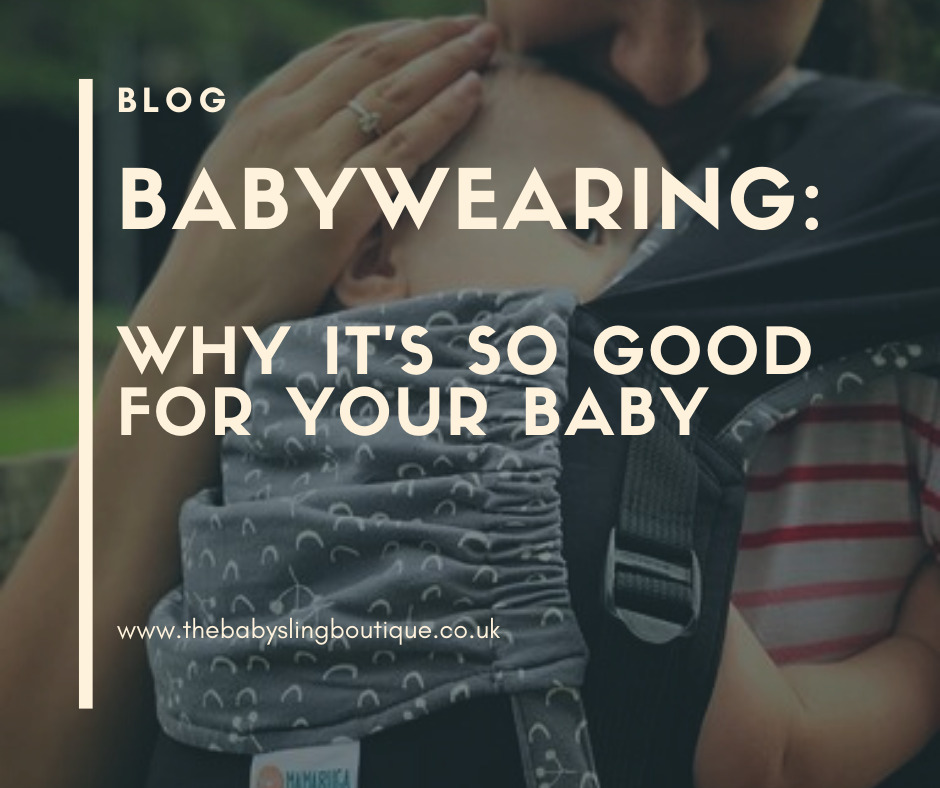
Babywearing – why it’s so good for your baby
Carrying your baby in a carrier or sling is obviously practical. It allows you to be hands free, allows you to walk the dog in the woods, and allows you to nip in and out of shops without the burden of a bulky pram. But this is only the tip of the iceberg.
There’s a reason many traditional cultures have some form of ‘babywearing’ – and a reason these cultures don’t seem to suffer from the same battles with their children as we in the West now do. ‘Terrible twos’ or ‘three-nagers’ are just not a thing, nor teenage rebellion…. Not that I’m suggesting you carry your 14 year old! – but you may be surprised to hear that building a secure bond with your child in their first few years has long-lasting effects on their emotional wellbeing. And carrying your baby, and being responsive to their needs will help develop that bond and trust.
In fact babywearing has so many positive effects on your little one, you’ll be wondering why not everyone has cottoned on to this. It is often cited that sling babies are happier, healthier and smarter – but why is this?
Happier Babies
Well, all your baby really wants is to be close to you. Mums especially will be the first person a newborn will probably want to be held by, mostly because they have magic boobie milk, although other parents and non-nursing mums can of course establish an amazingly close bond.
Being held helps them to feel safe; it’s a big wide strange world out there. Even in the home there are new things and sounds they’re not sure of – and oh! if they are going through a developmental leap, their world is just turned upside down, and everything they thought they knew about is suddenly now messing with their growing minds, and they need to be under the wing of a trusted big person more than ever, while they sort their head out and start to learn what they can now comprehend and do.
Being held, or even just touched, releases oxytocin, the ‘love hormone’ into your baby’s blood stream. This alone will help your baby feel secure and secure, but it also starts to counteract the stress hormone cortisol. Now, cortisol is released when your baby gets worried about stuff and their needs aren’t met. A crying baby will have higher levels of cortisol than a baby that isn’t crying, and it will stay in their bodies even when they have stopped crying. It does take time for this to subside, but while it is there, your baby will still be a little on edge, and find it difficult to relax, possibly even finding it difficult to feed, and almost impossible to sleep. They will also cry easier next time, as there is still cortisol in their bodies. So if a baby can be held, and avoid the stresses and worries that lead to higher levels of cortisol, and create more oxytocin instead, they will simply cry less.
As a slingy-mum myself, I used to get asked why my daughter never cried (oh believe me, she did!), and how it was that she was so happy. It’s more than a coincidence that whenever I thought she needed it, I used to pop her in the sling, especially when out in new and busy places.
Social Skills
I used to get these kinds of lovely comments whenever we went out – the checkout ladies in Tescos in particular used to chat all the time, and they would chat to Amelie too. That social interaction with my baby I thought was so important for us.
I’m not a chatty person – anyone who knows me knows I’m a better listener and observer than a talker, a classic introvert I guess, so I maybe wouldn’t be narrating our whole day to her like I think some people do! – and this is always in my mind, and I worry about how it affects her*. But I would be chatting to her as we walked around getting the shopping, and she’d get lovely smiles off complete strangers, and they’d talk to her. So much nicer than sitting in a buggy looking at people’s shins and bottoms. And so much more comfy than the weird plastic contraptions they put on shopping trolleys for babies, or keeping her strapped into the car seat.
Having this social interaction, and being able to observe how adults interact with each other, actually helps babies to learn language. They are more aware of facial expressions, body language, they will pick up on your emotions, and breathing patterns.
Better Development
Being close to mum or dad a lot of the time means your baby is part of your world, while being in a calm and quiet alertness (unless they’re sleeping!). They can learn so much while in this state of mind, about you, about your world, and they will take it all in. The best learning toy when they’re very young is actually you. And when they’ve had enough they can close their eyes and have a lovely restful sleep, on you.
The movement the baby feels while carried will also help develop their balance. Motion sensors in the ears, plus information about what they are seeing is sent to the brain, and the cerebellum and cerebral cortex organizes it all. This is their vestibular system, and stimulation at an early age will help with motor skills development. Alongside the brain development, the gentle strengthening of muscles in the back in response to movement means that sling babies often learn to sit, stand and walk earlier than others their age.
Healthier Babies
As with the parent who is doing the carrying, the oxytocin released can help a baby’s immune system by reducing stress and improving sleep. But that’s not all. Carrying a baby in the upright position can help with digestion. Products on the market like Infocol and gripe water are meant to help with wind, colic and ‘gripe’, but then they can also seem to cause constipation, and reflux. Babies are of course unable to move themselves and will often need to be held and burped once fed, but if a baby is in a sling, with the gentle tummy pressure and movement, they are effectively getting burped all the time they are in it. When held in a position that supports the natural curve of the spine, so baby is not slumped, their organs are not squashed and have room to function, and the milk can go down properly and any gas can come up unobstructed.
Being close to mum or dad can help regulate breathing as they take cues from you. Circulation improves. Even body temperature is regulated, as they stay nice and warm with cuddles, and in summer they benefit from your perspiration to cool them down when it’s hot (ew, but pretty cool!).
The last point I’m going to touch on – and it can be it’s own blog or even book on its own – is hip health so I’ll try to be brief. Your doctor will check your baby’s hips when he is born, and again at the 6-8 weeks check, for hip dysplasia, which is when the ball-shaped top of the hip bone doesn’t attach properly within the socket in the hip joint. It can be treated with a Pavlik harness, a fabric splint, which holds the hip bones up and in place so they can develop normally. This position is very similar to the position we would aim to get your baby’s hips into in an ergonomic sling or baby carrier, so even for babies that don’t need it, the ball and socket joint is in a good position for development. The knees need to be higher than baby’s bottom, creating a ‘M’ shape when looked at from the back, a nice squat position, and the legs should be apart but not opened too wide. This allows the ball part of the joint to sit squarely in the socket without strain. Slings that don’t promote this position are not going to be the best slings for development, but they are fine for short periods. Using a sling that promotes healthy hips and has a nice wide ‘seat’ is also going to be comfier for your baby than where his legs might dangle, and put pressure on the groin area.
Babywearing safety
All these benefits are of course awesome, but there are safety considerations. A lot of them are intuitive and common sense, and most of all I would urge any parent to trust their instincts, and if something doesn’t feel right with your child to remove them from the sling, check them over and reassure yourself they’re OK.
Essentially, your child’s airways need to be clear, they need to not be able to fall out of the carrier or sling, and you should be able to see them at all times. So no sleeping while wearing (however temping that sounds!), and you should not put yourself or your baby in situations that could be dangerous, such as riding a bike, riding a horse, swimming, climbing, fairground rides – anything you’d avoid while being pregnant. Positions like the cradle position where the baby is curled up can be dangerous as airways can be compromised, and babies can disappear deep inside a carrier where you can’t keep an eye on them.
The TICKS babywearing guidelines have been developed to be a memorable checklist to help you keep your baby safe in the sling. These are:
T for Tight
I for In View
C for Close enough to kiss
K for Keep chin off the chest
S for Supported Back.
Another one I like is Visible and Kissable which is what they promote in Canada.
You can read more about safety while babywearing here.
Sounds awesome – I want a sling-baby, where do I start?
There are so many great slings on the market these days from stretchy wraps and woven wraps, to soft-structured carriers that fasten with easy to use buckles, rings and ones that tie, and ring slings. To read more about the different types of slings, click here.
If you aren’t sure and want some guidance, or would like to try something, then do get in touch. I will aim to get back to any emails and other messages within 24 hours – you can contact me at hello@thebabyslingboutique.co.uk.
*It doesn’t affect her in the slightest, she is such a chatterbox, and always telling stories!


