
Baby Slings – A Beginners Guide
What is a sling?
A sling can come in many shapes and sizes. As the owner of The Baby “Sling” Boutique, I use the word ‘sling’ to mean any of the tools for carrying your baby, where you can have both your hands free. For me it covers fabric baby wraps, structured carriers with buckles or ties, and everything in between. Some people use the term to just mean ring slings, pouches or stretchy wraps. Other words you might hear for the same kind of thing are baby carriers, ring slings, backpack carriers, meh dai, mai tai, hybrid carriers, onbu or onbuhimo and papoose to name a few. There are also hip seat carriers, but as these are a ‘carrying aid’ needing a supportive arm, and don’t support a child’s back, I don’t tend to class them the same as a ‘sling’.
Brand names you might hear are Baby Bjorn, Ergobaby, Close Caboo, Infantino, Moby, Manduca, Baby K’Tan, Lillebaby, Chicco. There is also Beco, Boba, Neobulle, Je Porte Mon Bebe, Scootababy, Connecta, Integra, Hoppediz, Isara, Didymos, Lenny Lamb, Little Frog, and lots lots more.
Sadly a sling is one of those bits of baby equipment that everyone seems to buy but not everyone uses.




Why would you want one?
The first reason is that slings are convenient. No-one really tells you when you’re expecting your first child just how much they want to be held. We talk about there being a 4th trimester, which is the first 3 months after being born. Your baby is adjusting to being outside of the womb, and is still comforted by gentle movement. They find the warmth and touch of a parent or grandparent, and familiar sounds like your heartbeat, voice and breath calming. In the early weeks, a baby will sleep lots, and will probably fall asleep in your arms time and time again. If you can get your baby to nap in a sling during these early weeks it will really help you, even if it’s just a chance to get up from the sofa and make a cup of tea, or get to the loo!
As time goes by, your baby will go through developmental leaps, where their brain changes and their world as they knew it is turned upside down. Everything that was familiar is now bigger and more confusing, and while they figure it out and make sense of it all, the only constant is mum or dad. They will generally want to be close to you more than ever during these times. Then there’s teething. And illness. And immunisations. And being out in new places, or meeting new people. Your baby will want to be held and carried, possibly more than you will realize. And a sling will give you the ability to carry them, while also being able to use your hands for other things and get on with doing stuff. Even on days when you want to use the buggy, tuck a sling in your bag, just in case your baby wants to be held is not happy to be left in the buggy (yes it happens – lots!) More than just for the 4th trimester, I think a sling is just as necessary for ‘the first 1,000 days’, and beyond.
From mum or dad’s point of view, a sling can be useful for walking on the beach, woods, fields and anywhere you would struggle with a buggy. It can be useful when shopping, on holiday, going through airports, going to music festivals, taking an older sibling to the park and the school run, and for hopping on and off public transport.
Being held close to mum or dad (grandparent, childminder, etc etc) also helps develop a string bond between you. It helps with breastfeeding – from a biological point of view, it increases oxytocin and helps milk production and let-down. From a practical point of view you are able to feed on the go, using the sling as additional support. Oxytocin released helps counteract the stress hormone cortisol, and help your baby to relax and sleep better. The upright position your baby is held in can help with reflux and colic. Your baby will also learn about the world, pick up on body language and develop listening and language skills, as well as gaining better balance from adapting to the gentle movements.
Almost surprisingly, carrying your baby in a sling is also good for you. The oxytocin will get to work on you, reducing stress and helping you sleep better. You probably won’t even notice the extra calories you are burning, and the muscle-tone you are building, if you start carrying your baby as a newborn and carry them regularly. There are sling exercise classes now all over the country, but walking every day if you can with the sling will benefit you just as well, and help your cardiovascular system and mental wellbeing. The positive effects of carrying a baby during post-natal depression are also well-documented.
The list goes on and on… I have written a couple of blogs about this which can be found here.
I’m also going to mention the price. Parents-to-be will spend a lot of time and a lot of money picking a travel system – hundreds of pounds – just on a buggy. A quality stretchy wrap can be bought, new, from around £35. A new ring sling can be around £45-£50. You don’t need to spend much at all, and you don’t have to compromise on quality or safety if you only have a small budget. With a sling you love, you may find you don’t even need to use a buggy much, if at all!
Which sling is best?
There is no ‘best’ sling. There, I’ve said it. Everyone is different, every baby is different.
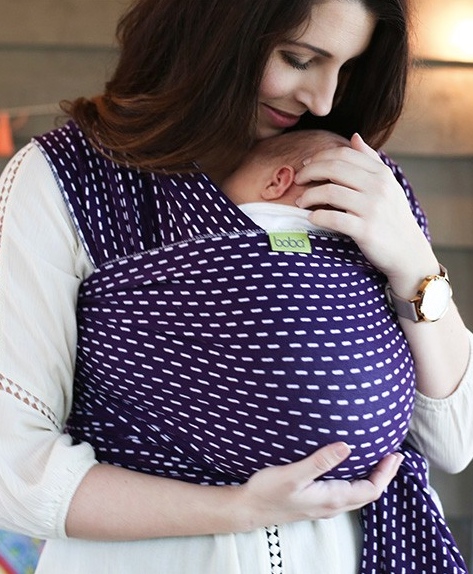
For a newborn, we generally recommend a stretchy wrap. These are soft, will fit any size adult, and will support your baby’s delicate spine and back gently. They will provide a nice wide seat where your baby’s hips are kept in a healthy position for development. These will last you up to around 8-10 months, although some brands are sturdier and will last for older babies and toddlers.


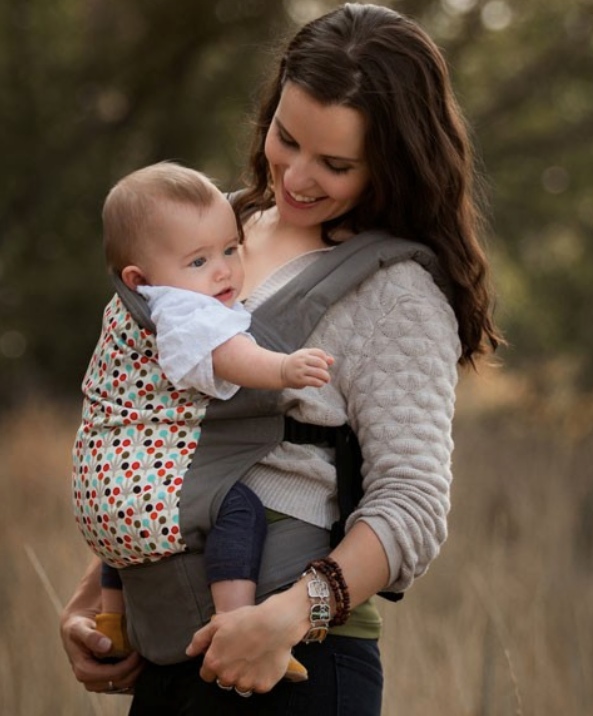
Other options for a newborn include a soft-structured carrier like an Ergo, where you fasten a waist belt around you, there is panel that supports your baby’s bottom and back, and it clips and tightens using buckles. You gain points here for convenience, but you may also lose a few points in good positioning and support.

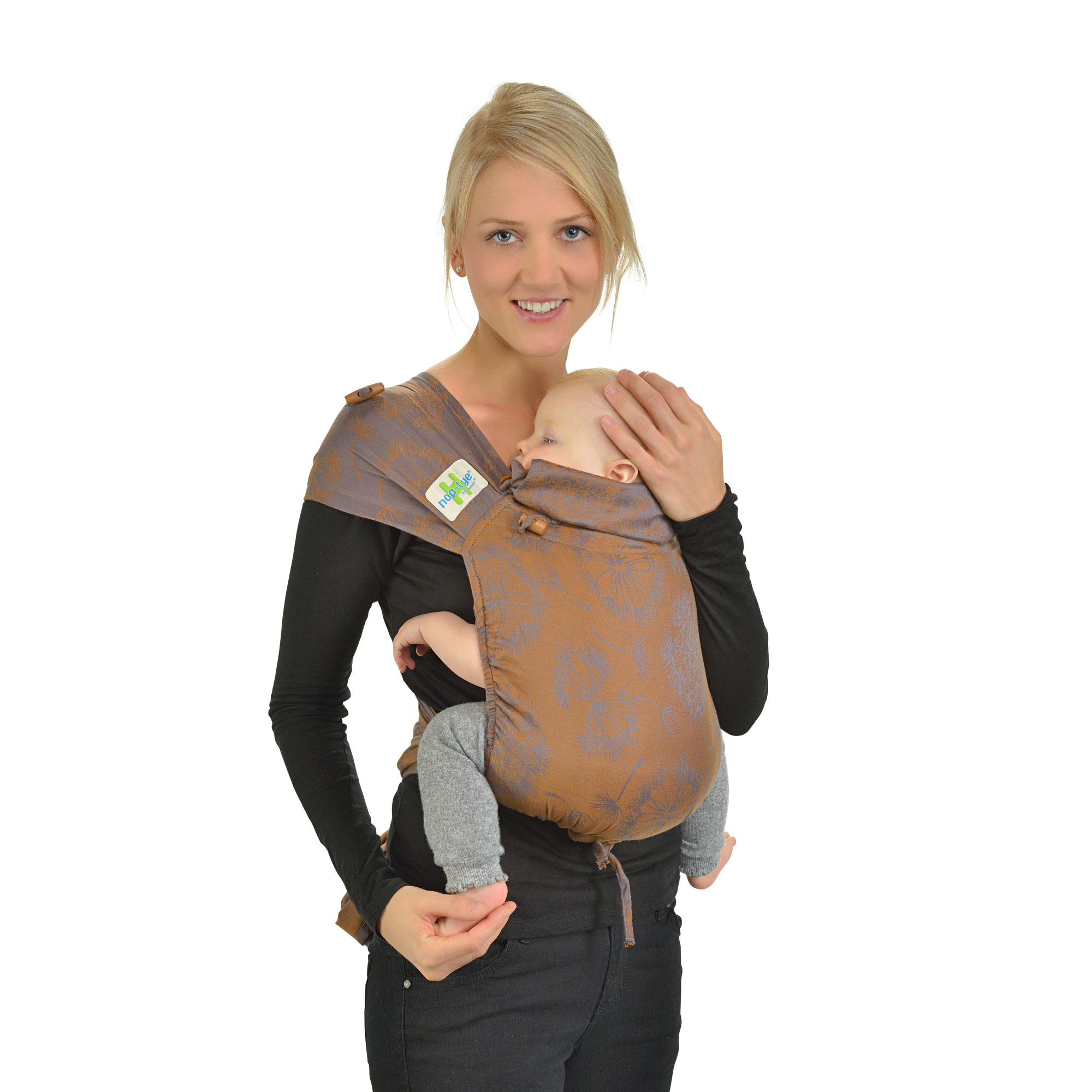
A more versatile version of this is based on an Asian Meh Dai style carrier, where you tie the waistband around you, a similar panel supports your baby’s bottom and back, and the shoulder straps tie with a double-knot. These carriers can adjust easier to a growing baby, some better than others, and can also be transferred easier between mum and dad say, and often provide a better position for your baby. These are a good compromise between convenience, comfort and positioning; a good all-rounder.
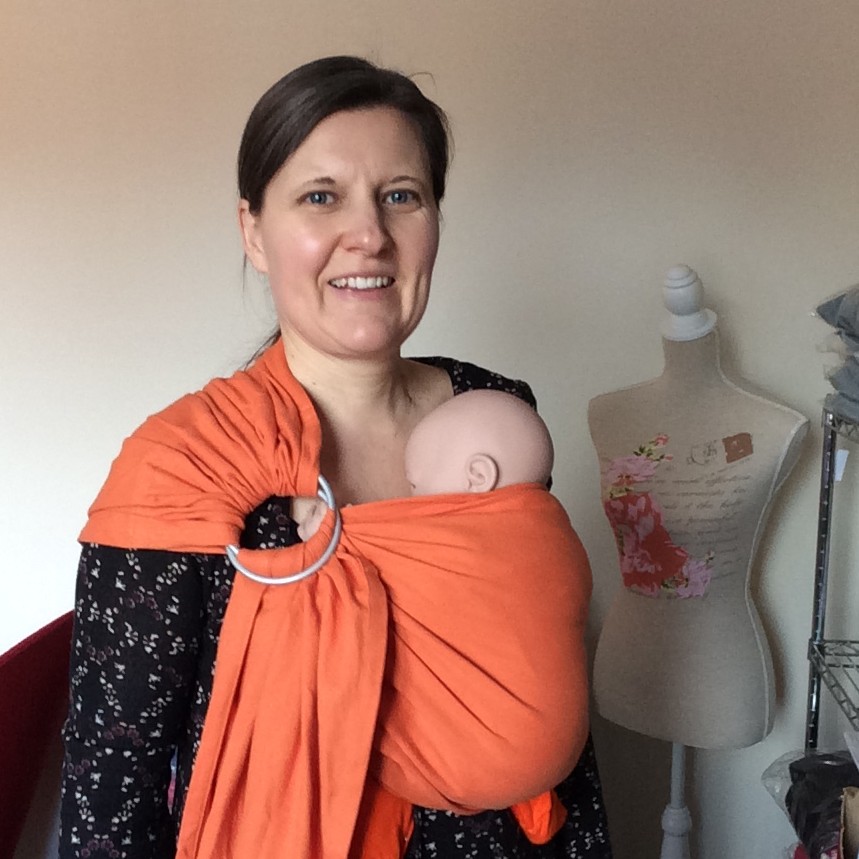
One of my favourites for a newborn is a ring sling. This is a one-shouldered fabric carrier that adjusts using rings. It can create a lovely deep knee-to-knee seat for your baby, and support the curve of their spine. These can be great for breastfeeding on the go, and will last and last right up until toddler-hood and beyond. You win points here for being quick to use and lightweight, but lose some for being one-sided and for having to master a new skill to tighten it well.

There are also wraps made of a long length of woven fabric which although not soft and stretchy, will provide better support than a stretchy wrap, and usually enable you to carry your baby for longer during the day than a soft-structured carrier. The weight of your baby is spread across your back, across your shoulders, and is absorbed by the length of fabric. The weave will have some give, and the carrier is formed as you drape it around you and your baby, sometimes several times round, tightening it strand by strand, and tying. They come in different lengths, blends of fabric, and you can tie them on your front back and hip in an endless number of carries. Points awarded for comfort, versatility and attractiveness, points lost for ease of use.


Are they safe?
Slings are safe. Always follow the manufacturer’s instructions or those of a babywearing professional, your own feelings and intuition, as well as the safe carrying guidelines that have been produced.
The two very basic themes of safety which these guidelines are based upon are 1) you should always make sure your baby’s airways are unobstructed, and 2) you should make sure that your baby will not fall from the carrier.
In the UK we have TICKS, in the USA they have the ABC’s and in Canada they have the Visible and Kissable campaign. They provide easy to remember checklists, which you should keep in mind when putting your baby in the carrier, and throughout their time in the carrier.


How do you use it?
There are baby sling educators like myself, either consultants or peer supporters who can show you how to use the different types of carriers. You can book appointments, workshops, or turn up at a sling library – depending on the type of support you feel you would like.
A consultation appointment with a babywearing consultant can seem like an unnecessary expense and a luxury you can’t afford, but a session like this would give you dedicated time on a one to one basis to learn new skills, focusing on you and your baby, and what you need from a carrier. Think of a personal stylist, who will work with you to figure out your style, colours and what works for your body shape, and come up with suggestions for a new wardrobe! – only for slings. (By the way, these sessions in the fashion industry cost upwards of £85 an hour!)
A workshop is generally less expensive, and will have a certain focus for learning within a group, and will be less tailored to your individual needs. Think of an IT training course at work, where although the group is there to learn the same things, the delegates all come from different job roles, some people will take to it more naturally than others, and some will hide at the back not quite taking it all in, and wary of asking stupid questions!
At a sling library you may get to see demos of various slings, and meet like minded people in a social setting, but time to learn new stuff will be limited. In terms of learning potential, think of a market-stall showing the latest JML cleaning product or labour-saving device! … Professionally demo’d by someone who has done it a thousand times – you like the look of the product, get the gist of how to use it, and think it looks easy enough, but when you take one home and try it out for yourself you maybe don’t get the same results! You may want to go to the library a few times before you find a sling you are happy with, and are getting a good comfortable and safe position.
New slings will come with manufacturers instructions. There are many many videos on You Tube. There are groups on Facebook. In fact there is a massive babywearing community online, if you know where to find it. A good resource is www.slingpages.co.uk.
A few words on Positioning
A good ‘ergonomic’ carrier or sling is one that provides a nice wide seat for your baby, with knees higher than their bottom. This is often called the M position. From the side, your baby’s spine should form a J shape.
Essentially, your baby should be in the same position she or he naturally forms when held in arms. Especially for newborns, you will notice their curved spine, and scrunched up legs. Young babies will not lie flat, and should not be forced to straighten their legs or backbone in a carrier, cot or baby seat. We just want to hold and support them in their most natural position.
Young babies should have their back supported at least up to the nape of their neck (but no higher than their ears). Older babies and toddlers don’t need the back support to be so high, and can have arms out as long as they are supported up to their armpits.




Where do I get one from?
Not Amazon or eBay! Although being many people’s go-to place for buying online, these can be a false economy when it comes to saving a few quid on a baby sling. My main bugbear for buying off these sites/apps is that the variety of slings available is limited. These sites are dominated by large corporations with large marketing budgets, and sellers from Asia with inferior products. Retailers like myself are unable to sell on these platforms having signed reseller contracts that say that we won’t!
A specialist slings retailer may provide a Try Before You Buy service (like I do!) to ensure you don’t pay out on something you’re not going to use. Often they are run by babywearing consultants who will provide advice and help you choose a carrier (like I do!). T his may also extend to invaluable after-sales support, and they will be happy to trouble-shoot your carrier to ensure it is comfy and safe (like I do!).
It can be possible to get yourself a bargain, either pre-loved or new, but if it sounds too good to be true, it probably is.
Here is a link to the slings for newborns you can buy from me.


